DRDO Centre for Artificial Intelligence and Robotics (CAIR) · military humanoid
DRDO bipedal humanoid
STAR programme
A government-built humanoid meant to reduce soldiers' exposure in high-risk work. Details are thin and come from secondary reports.
- Price
- —Not published
- Height
- —Not published
- Weight
- —Not published
- Payload
- —Not published
- Speed
- —Not published
- Battery
- —Not published
Not for sale: Government military research prototype; not for sale.
Not sure this is the one? Find the best robot for your job Starts with: research and teaching. Five more quick questions.
Why it matters
India's defence lab showed its humanoid's first unsupported steps.
Real-world use
No customers or deployments reported yet.
Timeline
- Released
- Not yet
Maker
DRDO Centre for Artificial Intelligence and Robotics (CAIR)Government lab · India (CAIR Bengaluru; R&DE Engineers Pune)Government-funded (DRDO).
What it has been shown doing
We checked public videos and press for DRDO bipedal humanoid (STAR programme) and found no clear demo of the skills we track yet.
Public attention
How much public attention DRDO bipedal humanoid (STAR programme) gets, from open data.
- No Wikipedia article of its own yet
- 1 news story from reputable press listed on this page
Measures how much people read and write about a robot, not how good it is. Measured 2026-10-14; same method for every robot. How it is measured
What’s inside
The parts the company has talked about publicly.
- Movement
- Walks on legs
- Actuators & motors
- Muscle-like actuators; upper body has 24 DoF: 7 per arm, 4 in the gripper, 2 in the head.
- Hands
- 4-DoF grippers with closed-loop gripping for turning, pushing, pulling, opening valves and handling mines or explosives.
- Sensors & vision
- Real-time environmental sensors for SLAM-based mapping and navigation.
- AI & software
- Fall and push recovery, real-time map generation, autonomous navigation; work under way on understanding operator commands.
- Other details
- Developed by R&DE (Engineers), Pune, with CAIR; designed for day/night, indoor/outdoor and jungle terrain.
From the maker
DRDO bipedal humanoid (STAR programme) is the only humanoid from DRDO Centre for Artificial Intelligence and Robotics (CAIR) in the atlas.
Made, sold and where
Unit counts are usually company figures; analysts often disagree.
- Price
- Not published
- How to get one
- Not for saleGovernment military research prototype; not for sale.
- Built
- Prototype; completion targeted for 2027.
News
The latest 1, newest first. Summaries are ours; tap through for the original.
- DRDO reveals humanoid for frontline missions
R&DE (Engineers) showed separate upper- and lower-body prototypes at a Pune legged-robotics workshop.
Outlook Business
Side by side with its peers
Picked by the same rules for every humanoid: another maker’s robot that moves the same way, is at the same stage and does at least one of the same main jobs, first shown within two years. Closer size and price rank higher. Few robots match closely, so these are the nearest matches. How we choose
| Measure | No public photo yetWe only show photos we're allowed to useDRDO bipedal humanoid (STAR programme)DRDO Centre for Artificial Intelligence and Robotics (CAIR) | 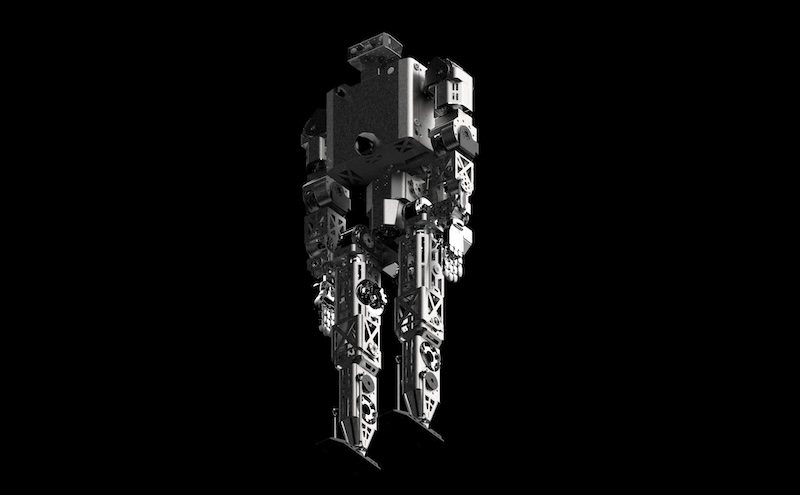 RogerMinerva HumanoidsSame job: military · Both walk · Both in development RogerMinerva HumanoidsSame job: military · Both walk · Both in development |
|---|---|---|
| First shown | 2025-05 | 2026-10-06 |
| Status | Prototype | Prototype |
| Height | — | — |
| Weight | — | — |
| Joints | — | — |
| Speed | — | — |
| Payload | — | — |
| Battery | — | — |
| Price | — | — |
Sources
Figures come from public sources. Every link below backs something on this page.
Photos and logos only identify each robot and its maker. Simbeing is not affiliated with, sponsored by or endorsing any company, and nothing here is advertising. Figures are for statistics only and are not advice of any kind. Terms of use