RIKEN · care humanoid
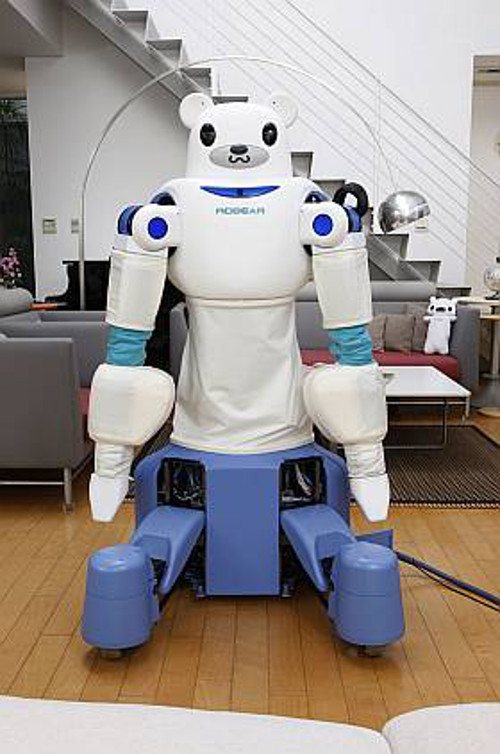
ROBEAR
A 140 kg bear-faced nursing robot on a wheeled base whose padded arms and rubber tactile sensors let it lift and help patients stand. Included with a note: humanoid torso and arms but a bear face and no hands. The project ended when its RIKEN centre closed in March 2015.
- Price
- —Not published
- Height
- —Not published
- Weight
- 140 kgHeavier than 92%
- Payload
- —Not published
- Speed
- —Not published
- Battery
- —Not published
Not sure this is the one? Find the best robot for your job Starts with: care and hospitals. Five more quick questions.
Why it matters
Showed a robot gently lifting a person from a bed into a wheelchair, one of the hardest tasks for care workers.
Real-world use
RIKEN-SRK Collaboration Center, Nagoya (closed March 2015)
Maker
RIKENGovernment lab · founded 1917 · Wakō, Saitama, JapanAlmost entirely government funded; annual budget about JPY 100 billion (US$750 million) in FY2023.
How it stacks up
Against other humanoids that publish the figure. Pick a measure.
ROBEAR is heavier than 92% of the 277 other humanoids that publish a weight. Bars show the 7 closest in date.
Not published by the maker: height, speed, payload, joints, battery, price.
Public attention
A historic robot: no longer sold or in use, so it is not ranked against current humanoids.
- No Wikipedia article of its own yet
- 2 news stories from reputable press listed on this page
Measures how much people read and write about a robot, not how good it is. Measured 2026-10-14; same method for every robot. How it is measured
What’s inside
The parts the company has talked about publicly.
- Hands
- none
- Movement
- Wheeled base
- Actuators & motors
- Very-low-gear-ratio actuator units for fast, backdrivable joints that feed forces back for gentle motion.
- Sensors & vision
- Torque sensors and Smart Rubber capacitance-type tactile sensors made entirely of rubber.
- Materials & build
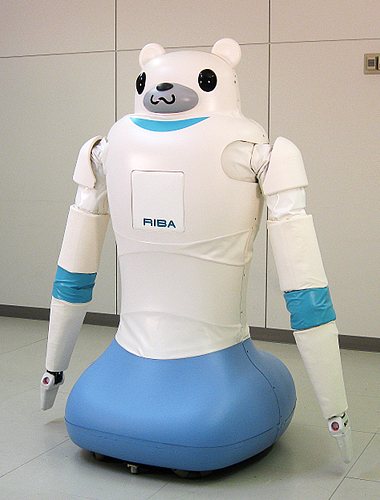
- 140 kg, versus 230 kg for RIBA-II; legs extend for lifting and retract for doorways.
- Other details
- Lifts patients from bed to wheelchair or helps them stand.
Lineage
Every RIKEN and Sumitomo Riko humanoid in order.
Watch ROBEAR
Made, sold and where
Unit counts are usually company figures; analysts often disagree.
- Price
- Not published
- How to get one
- No official buying page found
- Built
- research prototype
- Sold or delivered
- never sold
- Where it is sold or used
- Japan
- Customers and pilots
- RIKEN-SRK Collaboration Center, Nagoya (closed March 2015)
News
The latest 2, newest first. Summaries are ours; tap through for the original.
- Project ends at RIKEN
RIKEN added that the collaboration center closed in March 2015 and ROBEAR work no longer continues there.
RIKEN - ROBEAR announced
RIKEN and Sumitomo Riko presented a lighter bear-faced nursing-care robot.
RIKEN
Side by side with its peers
Picked by the same rules for every humanoid: another maker’s robot that moves the same way, is at the same stage and does at least one of the same main jobs, first shown within two years. Closer size and price rank higher. Few robots match closely, so these are the nearest matches. How we choose
| Measure | ROBEARRIKEN and Sumitomo Riko | 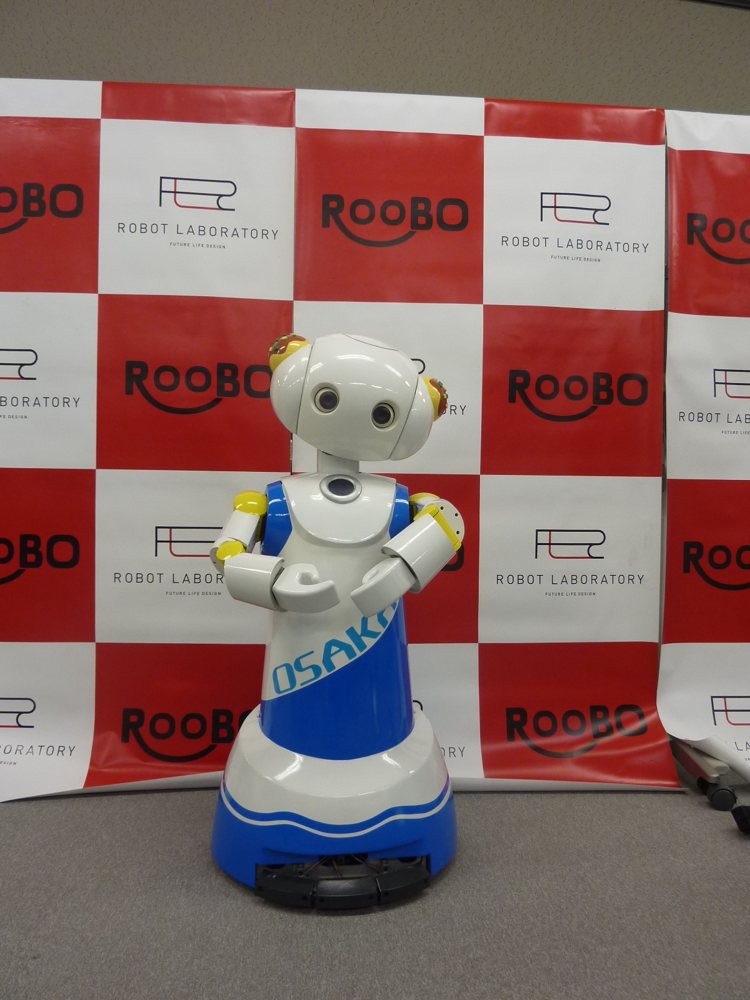 Robovie-R Ver.3Vstone and ATRSame job: care · Both on wheels · Both past robots Robovie-R Ver.3Vstone and ATRSame job: care · Both on wheels · Both past robots | No public photo yetWe only show photos we're allowed to useSmartPal VIIYaskawa ElectricSame job: care · Both on wheels · Both past robots | 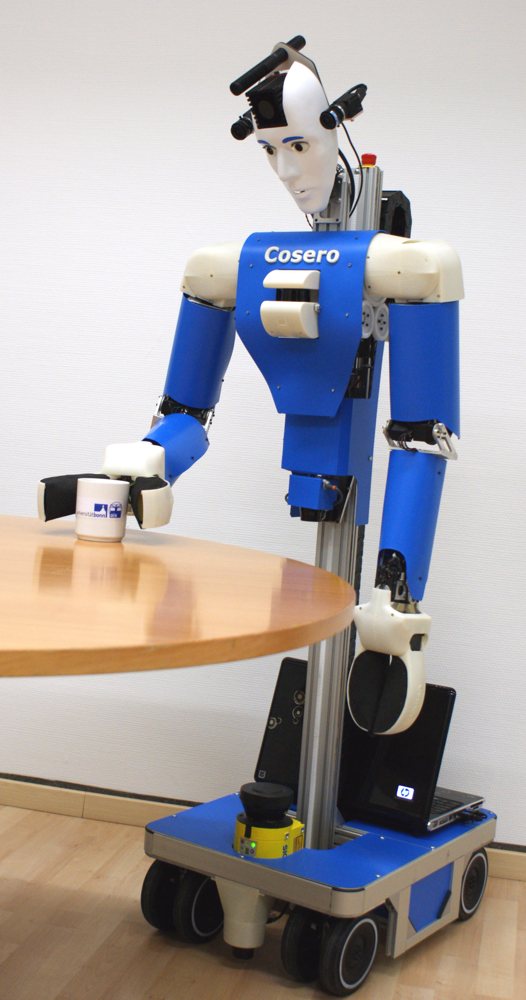 CoseroUniversity of Bonn (Autonomous Intelligent Systems group, team NimbRo@Home)Same job: care · Both on wheels · Both past robots CoseroUniversity of Bonn (Autonomous Intelligent Systems group, team NimbRo@Home)Same job: care · Both on wheels · Both past robots |
|---|---|---|---|---|
| First shown | 2015-02-23 | 2010-04-16 | 2011-11 | 2010-09 |
| Status | Retired | Discontinued | Retired | Retired |
| Height | — | 120 cm | — | — |
| Weight | 140 kg | 43 kg | — | — |
| Joints | — | 17 | — | 30 |
| Speed | — | 2.5 km/h | — | — |
| Payload | — | — | — | — |
| Battery | — | — | — | — |
| Price | — | $41,000 | — | — |
Sources
Figures come from the maker. Every link below backs something on this page.
Photos and logos only identify each robot and its maker. Simbeing is not affiliated with, sponsored by or endorsing any company, and nothing here is advertising. Figures are for statistics only and are not advice of any kind. Terms of use