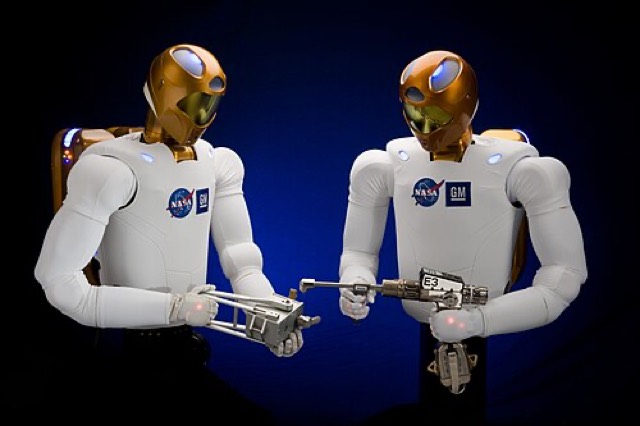
NASA Lyndon B. Johnson Space Center · space humanoid
Robonaut 2
R2
A dexterous upper-body humanoid (height is waist to head) with 12-DOF hands and over 350 sensors, built with GM for both spaceflight and car-factory work. Two units were made, R2A and R2B.
- Price
- —cost about US$2.5 million per robot; not sold
- Height
- 102 cmTaller than 9%
- Weight
- 149.7 kgHeavier than 92%
- Payload
- 9 kgCarries more than 40%
- Speed
- —Not published
- Battery
- —Not published
Not sure this is the one? Find the best robot for your job Starts with: factory work. Five more quick questions.
Why it matters
First humanoid robot in space and first US-built robot on the International Space Station (launched 24 Feb 2011 on STS-133).
Real-world use
Worked in the ISS Destiny lab from 2011; climbing legs were added in 2014; returned to Earth for repair in 2018 and is now displayed at the Smithsonian's Udvar-Hazy Center.
Maker
NASA Lyndon B. Johnson Space CenterGovernment lab · founded 1961 · Houston, United StatesUS federal government (NASA)
How it stacks up
Against other humanoids that publish the figure. Pick a measure.
Robonaut 2 (R2) is taller than 9% of the 305 other humanoids that publish a height. Bars show the 7 closest in date.
Robonaut 2 (R2) is heavier than 92% of the 277 other humanoids that publish a weight. Bars show the 7 closest in date.
Robonaut 2 (R2) carries more than 40% of the 132 other humanoids that publish a payload. Bars show the 7 closest in date.
Robonaut 2 (R2) has more joints than 74% of the 236 other humanoids that publish a joints. Bars show the 7 closest in date.
Not published by the maker: speed, battery, price.
Public attention
A historic robot: no longer sold or in use, so it is not ranked against current humanoids.
- 2,125 views of its Wikipedia article in the last 90 days (Robonaut)
- 3 news stories from reputable press listed on this page
Measures how much people read and write about a robot, not how good it is. Measured 2026-10-13; same method for every robot. How it is measured
What’s inside
The parts the company has talked about publicly.
- Movement
- Stationary · 42 joints
- Actuators & motors
- 54 servomotors driving 42 degrees of freedom (arms 7 each, hands 12 each, neck 3, waist 1); arms move at up to 2 m/s and lift about 18 kg (40 lb). NASA's design goals included a soft (compliant) drivetrain.
- Hands
- 12 degrees of freedom per hand plus 2 in the wrist; about 2.3 kg (5 lb) of grip per finger; custom six-axis load cells in each hand and fingertip touch sensors.
- Sensors & vision
- More than 350 sensors: four visor cameras (two stereo, two auxiliary), an infrared/time-of-flight depth camera in the mouth area, hand load cells and fingertip tactile sensors.
- Compute
- 38 PowerPC processors; flight unit upgraded with radiation-tolerant processors. Vision ran on MVTec Halcon 9.0.
- Battery & power
- Ran on ISS DC power; a battery backpack for untethered use was planned but no capacity has been published.
- Materials & build
- Mainly aluminium with steel; the flight unit added a flame-resistant outer skin and electromagnetic shielding.
- AI & software
- Autonomous and teleoperated modes, commanded from the ISS or from the ground.
- Other details
- ISS upgrades included quieter fans and rewiring for station power. Climbing legs were delivered on SpX-3 in April 2014.
Named suppliers:Real-Time Innovations
Lineage
Every NASA Johnson Space Center and General Motors humanoid in order.
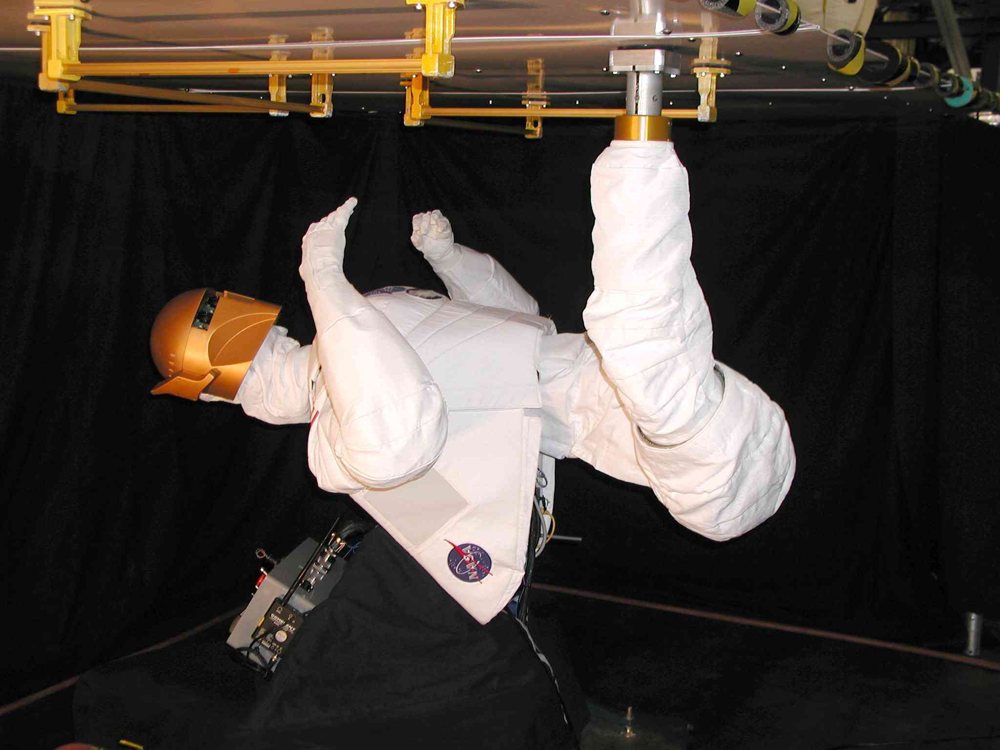
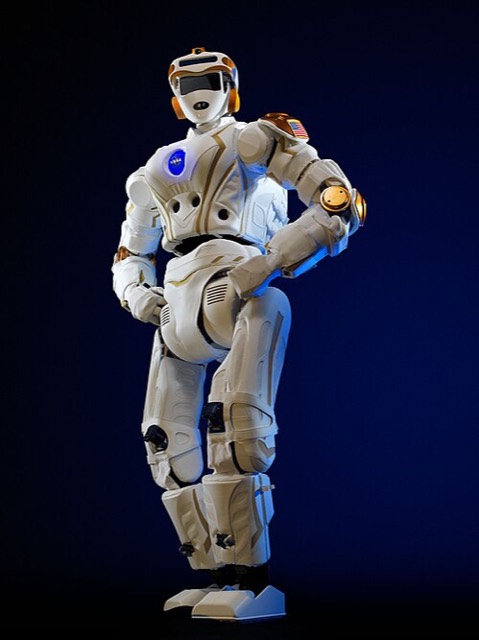
Made, sold and where
Unit counts are usually company figures; analysts often disagree.
- Price
- Not publishedcost about US$2.5 million per robot; not sold
- How to get one
- No official buying page found
- Sold or delivered
- Never sold; about US$2.5 million per robot
- Where it is sold or used
- United States; International Space Station (2011-2018)
- Customers and pilots
- International Space Station (NASA); publicly displayed at the Smithsonian Udvar-Hazy Center in October 2024 (NASA FY2025 Agency Financial Report).
News
The latest 3, newest first. Summaries are ours; tap through for the original.
- R2 returned to Earth for repairs
NASA's project review records that R2 was packed in February 2018, returned on SpaceX-14 for repairs, and reached the Johnson Space Center Robonaut lab in May 2018.
NASA - First humanoid moves in space
Robonaut 2 successfully moved for the first time in space on 13 October 2011.
Eurescom mess@ge - Mission to the International Space Station
NASA launched Robonaut 2 aboard space shuttle Discovery on STS-133 on February 24, 2011, for deployment to the ISS.
NASA
Side by side with its peers
Picked by the same rules for every humanoid: another maker’s robot that moves the same way, is at the same stage and does at least one of the same main jobs, first shown within two years. Closer size and price rank higher. Few robots match closely, so these are the nearest matches. How we choose
| Measure | Robonaut 2 (R2)NASA Johnson Space Center and General Motors | 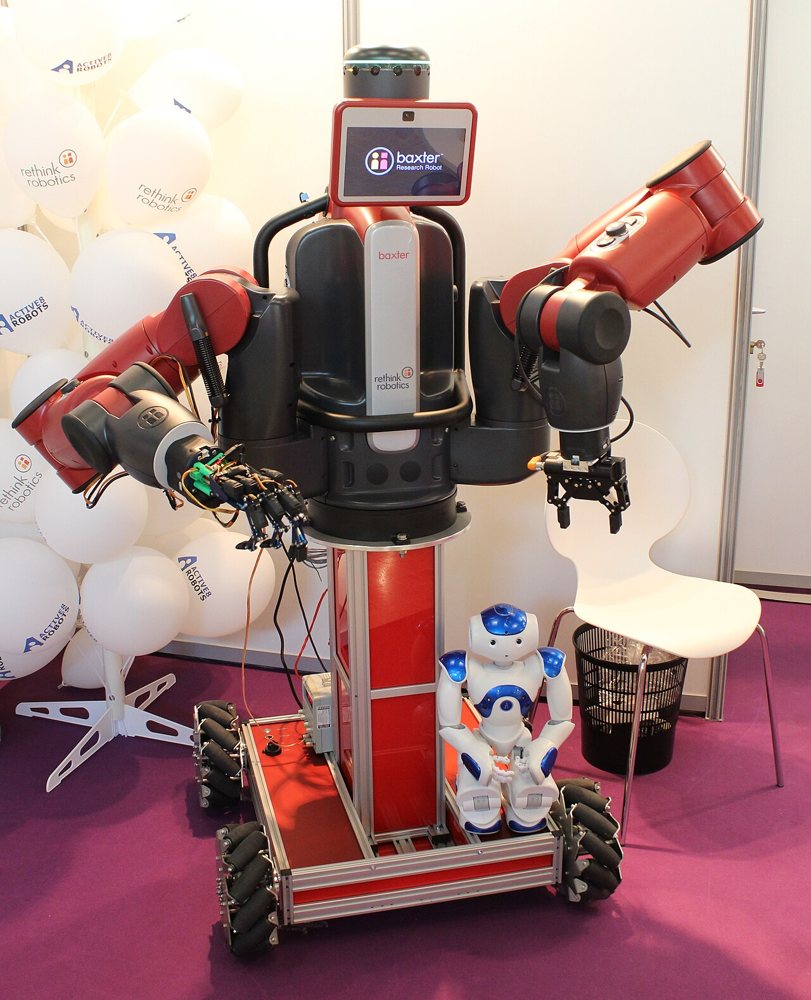 BaxterRethink RoboticsSame job: industrial · Both fixed in place · Both past robots BaxterRethink RoboticsSame job: industrial · Both fixed in place · Both past robots |  KiroboToyota, Dentsu, University of Tokyo RCAST and Robo GarageSame job: space · Both fixed in place · Both past robots KiroboToyota, Dentsu, University of Tokyo RCAST and Robo GarageSame job: space · Both fixed in place · Both past robots |
|---|---|---|---|
| First shown | 2010-02-04 | 2012-09-18 | 2013-06-26 |
| Status | Retired | Discontinued | Retired |
| Height | 102 cm | — | 34 cm |
| Weight | 149.7 kg | — | 1 kg |
| Joints | 42 | — | — |
| Speed | — | — | — |
| Payload | 9 kg | 2.3 kg | — |
| Battery | — | — | — |
| Price | — | $22,000 | — |
Sources
Figures come from press coverage. Every link below backs something on this page.
Photos and logos only identify each robot and its maker. Simbeing is not affiliated with, sponsored by or endorsing any company, and nothing here is advertising. Figures are for statistics only and are not advice of any kind. Terms of use