Waseda University / JST Moonshot program · research humanoid
Waseda Flutist Robot WF-4RVI
A seated humanoid flute player with bellows lungs and human-like lips and tongue that listens and watches to play alongside human musicians; the latest version of a flutist line Waseda began decades earlier.
- Price
- —Not published
- Height
- 170 cmTaller than 59%
- Weight
- 150 kgHeavier than 93%
- Payload
- —Not published
- Speed
- —Not published
- Battery
- —Not published
Not sure this is the one? Find the best robot for your job Starts with: research and teaching. Five more quick questions.
Why it matters
A retired humanoid from Waseda University (Atsuo Takanishi lab).
Real-world use
Played a classical duet with a robot saxophonist in 2008 (earlier version).
Timeline
- First shown
- 2011
- Released
- Not yet
Maker
Waseda University / JST Moonshot programUniversity lab · founded 1882 · Tokyo, JapanGovernment research funding through the JST Moonshot programme (amount not stated).
How it stacks up
Against other humanoids that publish the figure. Pick a measure.
Waseda Flutist Robot WF-4RVI is taller than 59% of the 305 other humanoids that publish a height. Bars show the 7 closest in date.
Waseda Flutist Robot WF-4RVI is heavier than 93% of the 277 other humanoids that publish a weight. Bars show the 7 closest in date.
Waseda Flutist Robot WF-4RVI has more joints than 71% of the 236 other humanoids that publish a joints. Bars show the 7 closest in date.
Not published by the maker: speed, payload, battery, price.
Public attention
A historic robot: no longer sold or in use, so it is not ranked against current humanoids.
- No Wikipedia article of its own yet
- 1 news story from reputable press listed on this page
Measures how much people read and write about a robot, not how good it is. Measured 2026-10-14; same method for every robot. How it is measured
What’s inside
The parts the company has talked about publicly.
- Movement
- Stationary · 41 joints
- Actuators & motors
- DC and AC motors with harmonic drives, driving motorised levers and pulleys; 41 DoF across the playing organs.
- Hands
- Arms and fingers that open and close the flute keys; fingertips of RTV silicone rubber. Per-hand DoF not published.
- Sensors & vision
- Two CCD cameras as eyes, a microphone, air pressure and air flow sensors, optical encoders and force sensors.
- Compute
- Three computers: one controls the robot, one generates MIDI accompaniment data, one processes the camera images.
- Materials & build
- Lungs are two acrylic cylinders with bellows; lips, oral cavity and vocal cords of Septon thermoplastic rubber; gel tongue tip; RTV silicone fingertips.
- AI & software
- Linux with custom control software; uses sound and vision cues to play along with human and robot musicians.
- Other details
- A vibrato mechanism imitates human vocal cords. Built by Atsuo Takanishi, Jorge Solis and colleagues; IEEE Spectrum rated an earlier version at roughly intermediate human skill.
Named suppliers:Harmonic Drive
Lineage
Every Waseda University (Atsuo Takanishi lab) humanoid in order.
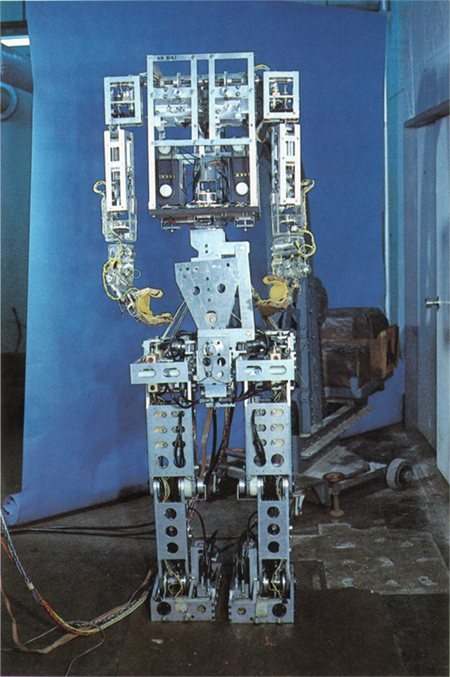 WABOT-11973Retired
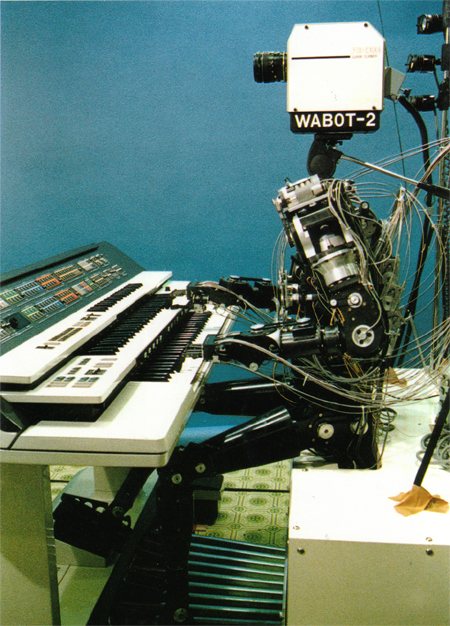 WABOT-21984Retired
- No public photo yetWe only show photos we're allowed to useHadaly-21997Retired
- No public photo yetWe only show photos we're allowed to useWABIAN1997Retired
- No public photo yetWe only show photos we're allowed to useWE-4RII2004Retired
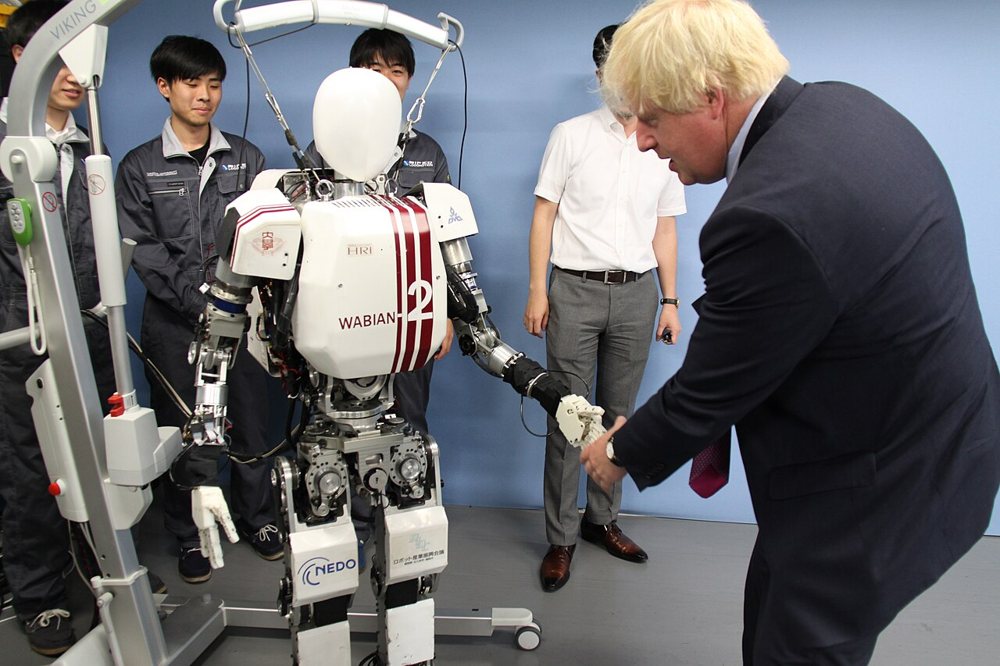 WABIAN-22006Retired
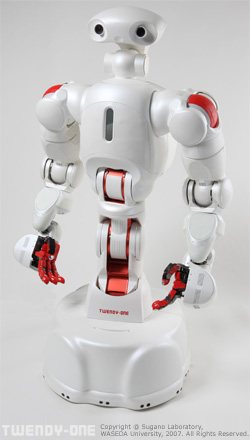 TWENDY-ONE2007Research
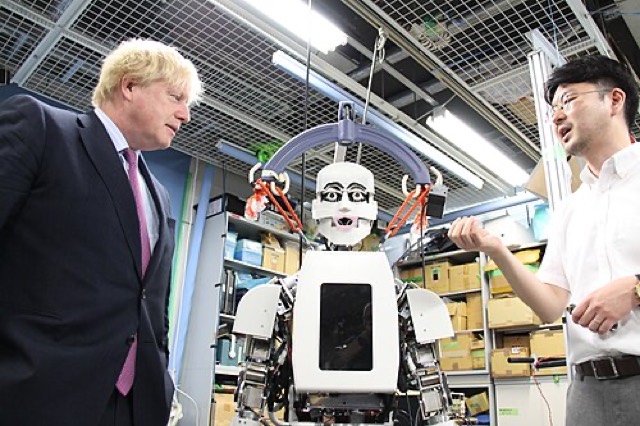 KOBIAN2009Research
- No public photo yetWe only show photos we're allowed to useWaseda Flutist Robot WF-4RVI2011Retired
- No public photo yetWe only show photos we're allowed to useAIREC (Dry-AIREC)2025Research
Watch Waseda Flutist Robot WF-4RVI
Made, sold and where
Unit counts are usually company figures; analysts often disagree.
- Price
- Not published
- How to get one
- No official buying page found
- Sold or delivered
- not sold (research robot)
- Where it is sold or used
- Takanishi Lab, Waseda University, Tokyo, Japan
News
The latest 1, newest first. Summaries are ours; tap through for the original.
- Waseda's flute robot plays a duet with a robot saxophonist
An earlier version of the flutist performed a classical duet with Waseda's robot saxophonist and traded phrases with a human player.
IEEE Spectrum
Side by side with its peers
Picked by the same rules for every humanoid: another maker’s robot that moves the same way, is at the same stage and does at least one of the same main jobs, first shown within two years. Closer size and price rank higher. Few robots match closely, so these are the nearest matches. How we choose
| Measure | No public photo yetWe only show photos we're allowed to useWaseda Flutist Robot WF-4RVIWaseda University (Atsuo Takanishi lab) | 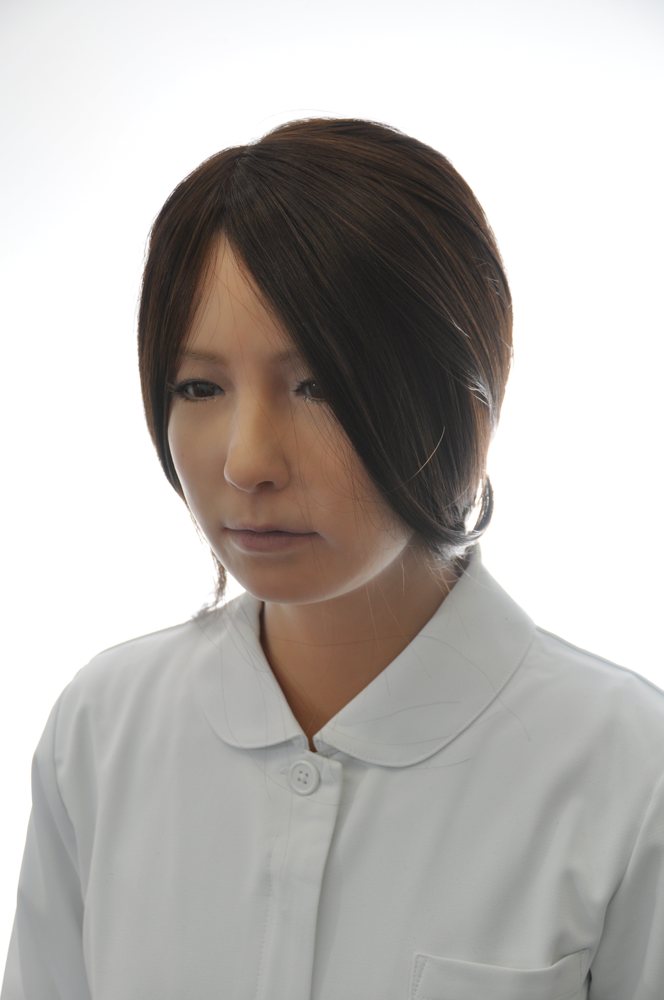 Geminoid FATR and Osaka University (Hiroshi Ishiguro) with KokoroSame job: entertainment · Both fixed in place · Both past robots Geminoid FATR and Osaka University (Hiroshi Ishiguro) with KokoroSame job: entertainment · Both fixed in place · Both past robots | 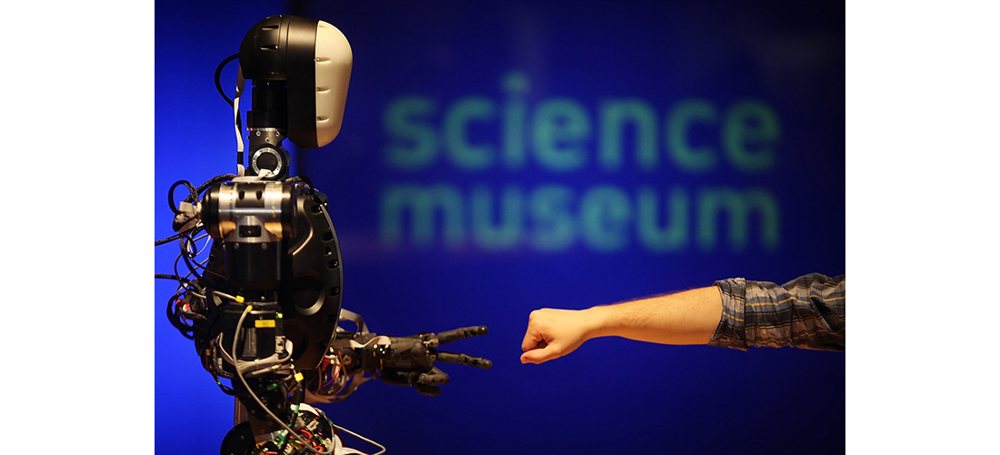 BERTI (Bristol Elumotion Robotic Torso 1)Elumotion Ltd with Bristol Robotics LaboratorySame job: entertainment · Both fixed in place · Both past robots BERTI (Bristol Elumotion Robotic Torso 1)Elumotion Ltd with Bristol Robotics LaboratorySame job: entertainment · Both fixed in place · Both past robots | No public photo yetWe only show photos we're allowed to useEveR-2 MuseKorea Institute of Industrial Technology (KITECH)Same job: entertainment · Both fixed in place · Both past robots · Similar size |
|---|---|---|---|---|
| First shown | 2011 | 2010-04-03 | 2009-02 | 2006 |
| Status | Retired | Retired | Retired | Retired |
| Height | 170 cm | 140 cm | — | 170 cm |
| Weight | 150 kg | 30 kg | — | 61 kg |
| Joints | 41 | 12 | — | 23 |
| Speed | — | — | — | — |
| Payload | — | — | — | — |
| Battery | — | — | — | — |
| Price | — | $110,000 | — | — |
Sources
Figures come from press coverage. Every link below backs something on this page.
Photos and logos only identify each robot and its maker. Simbeing is not affiliated with, sponsored by or endorsing any company, and nothing here is advertising. Figures are for statistics only and are not advice of any kind. Terms of use