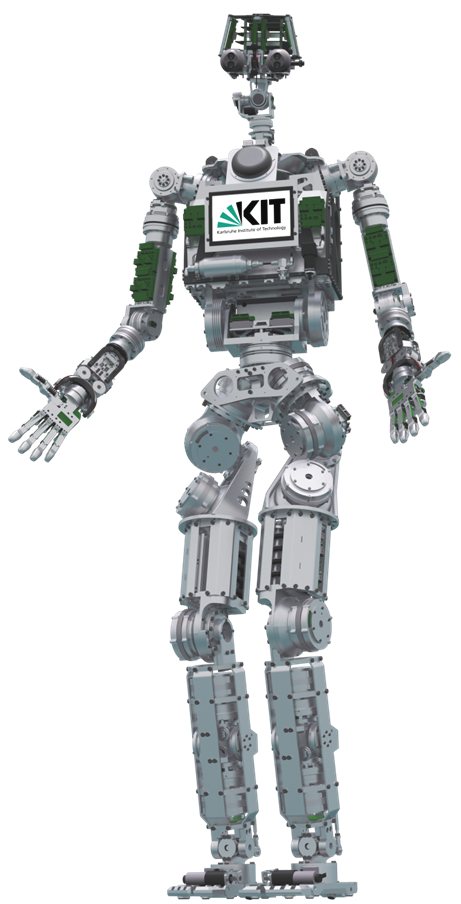
Karlsruhe Institute of Technology (H2T, High Performance Humanoid Technologies Lab) · research humanoid
ARMAR-4
A full-body, torque-controlled humanoid with 63 actuators, 214 sensors and 76 microcontrollers, the only walking member of the otherwise wheeled ARMAR family. The design was introduced in 2012.
- Price
- —Not published
- Height
- 170 cmTaller than 59%
- Weight
- 70 kgHeavier than 60%
- Payload
- —Not published
- Speed
- —Not published
- Battery
- —Not published
Not sure this is the one? Find the best robot for your job Starts with: research and teaching. Five more quick questions.
Why it matters
A retired humanoid from Karlsruhe Institute of Technology (H2T, Tamim Asfour).
Real-world use
No customers or deployments reported yet.
Timeline
- First shown
- 2012
- Released
- Not yet
Maker
Karlsruhe Institute of Technology (H2T, High Performance Humanoid Technologies Lab)University lab · founded 2009 · Karlsruhe, GermanyPublic university (budget about EUR 1.16 billion, 2023); ARMAR-III funded by the DFG SFB 588 programme, ARMAR-6 by the EU SecondHands project,…
How it stacks up
Against other humanoids that publish the figure. Pick a measure.
ARMAR-4 is taller than 59% of the 305 other humanoids that publish a height. Bars show the 7 closest in date.
ARMAR-4 is heavier than 60% of the 277 other humanoids that publish a weight. Bars show the 7 closest in date.
ARMAR-4 has more joints than 94% of the 236 other humanoids that publish a joints. Bars show the 7 closest in date.
Not published by the maker: speed, payload, battery, price.
Public attention
A historic robot: no longer sold or in use, so it is not ranked against current humanoids.
- No Wikipedia article of its own yet
- No recent press stories listed yet
Measures how much people read and write about a robot, not how good it is. Measured 2026-10-14; same method for every robot. How it is measured
What’s inside
The parts the company has talked about publicly.
- Hands
- simple
- Movement
- Walks on legs · 63 joints
- Actuators & motors
- 63 actuators for 63 active DoF; full-body torque control (maker figure).
- Sensors & vision
- 214 sensors in total (maker figure). The head, shared with ARMAR-IIIa/IIIb, has 7 DoF (4 neck, 3 eyes), six microphones, a 6D inertial sensor and two cameras per eye (wide-angle and narrow-angle).
- Compute
- Three PCs (perception, high-level control, balancing) plus 76 microcontrollers for low-level joint control.
- Battery & power
- On-board batteries, included in the 70 kg weight; capacity not published.
- Other details
- The only legged member of the otherwise wheeled ARMAR family; developed within KIT's Collaborative Research Center 588 (SFB 588) on humanoid robots.
Lineage
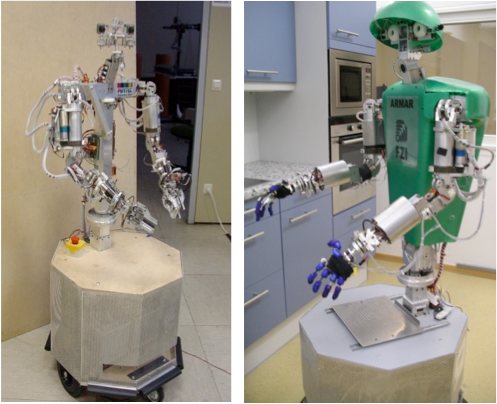
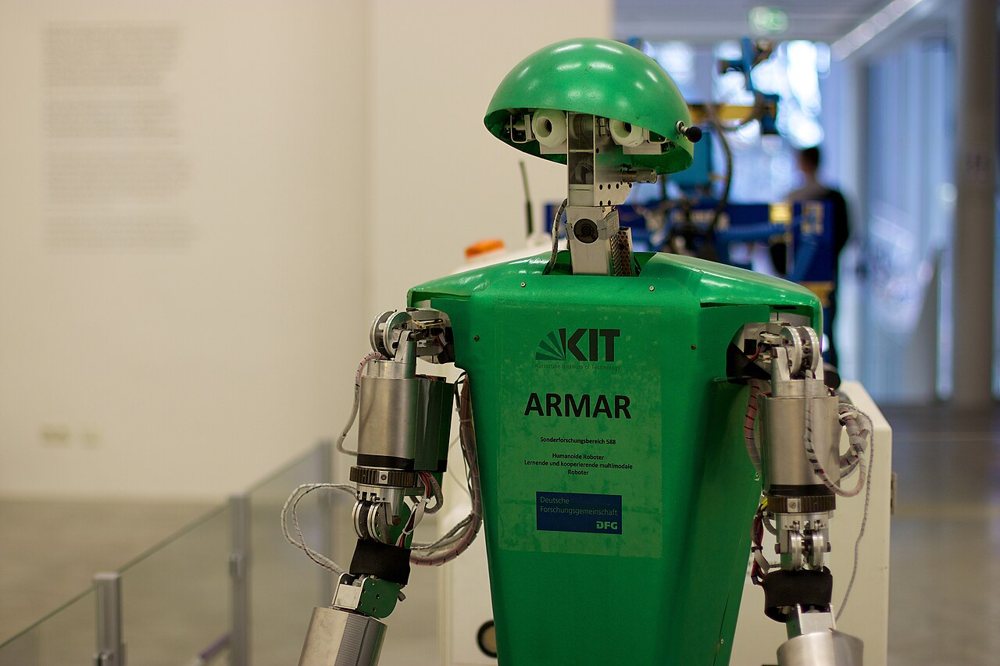
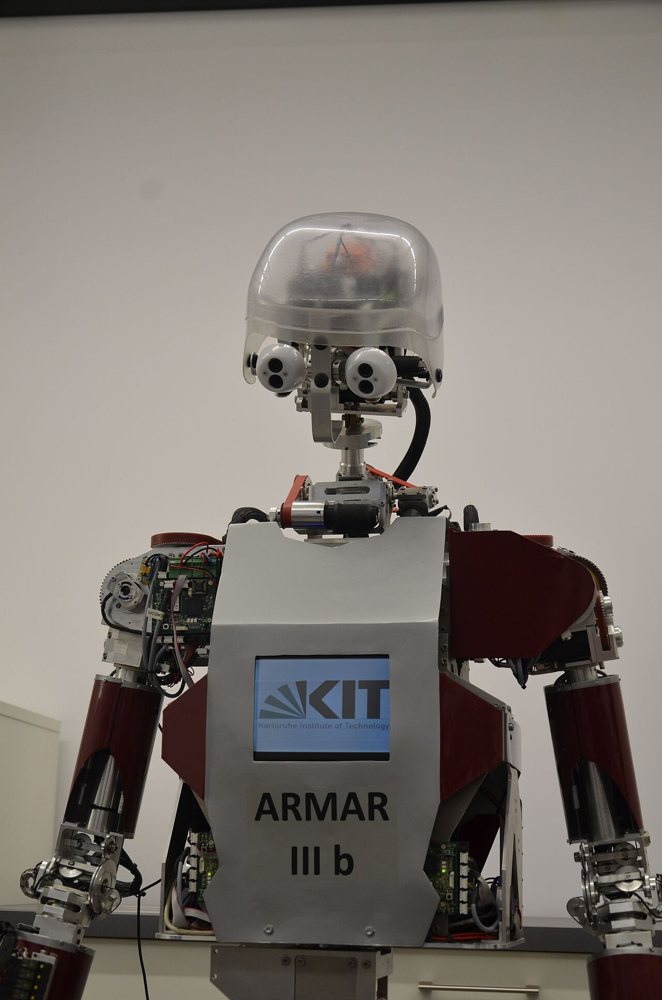
Every Karlsruhe Institute of Technology (H2T, Tamim Asfour) humanoid in order.
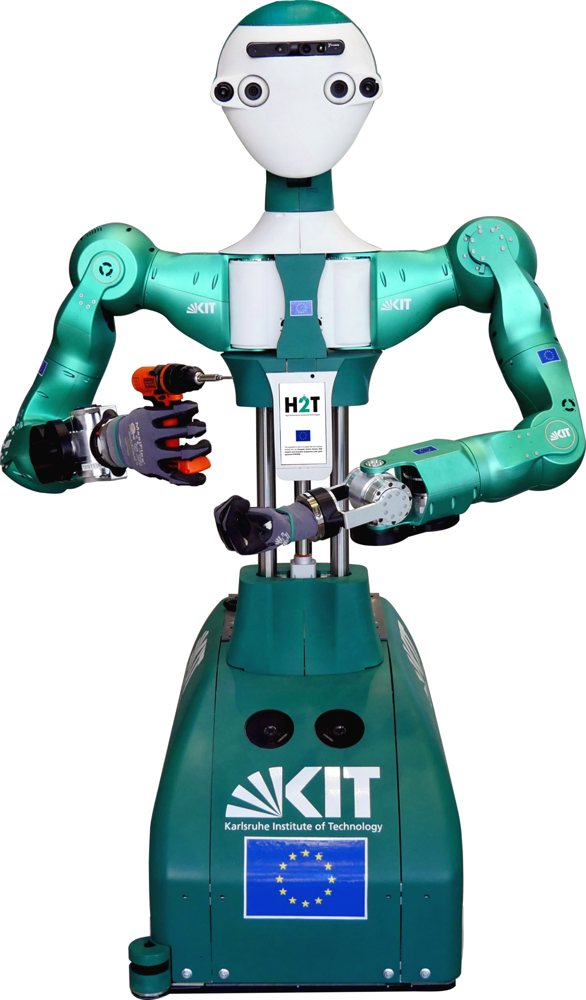

Watch ARMAR-4
Made, sold and where
Unit counts are usually company figures; analysts often disagree.
- Price
- Not published
- How to get one
- No official buying page found
- Sold or delivered
- not sold (research robot)
- Where it is sold or used
- H2T lab, Karlsruhe Institute of Technology, Germany
Side by side with its peers
Picked by the same rules for every humanoid: another maker’s robot that moves the same way, is at the same stage and does at least one of the same main jobs, first shown within two years. Closer size and price rank higher. How we choose
| Measure | ARMAR-4Karlsruhe Institute of Technology (H2T, Tamim Asfour) | 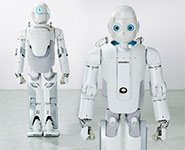 RoboraySamsung Electronics (robotics division) with KISTSame job: research · Both walk · Both past robots · Similar size RoboraySamsung Electronics (robotics division) with KISTSame job: research · Both walk · Both past robots · Similar size | 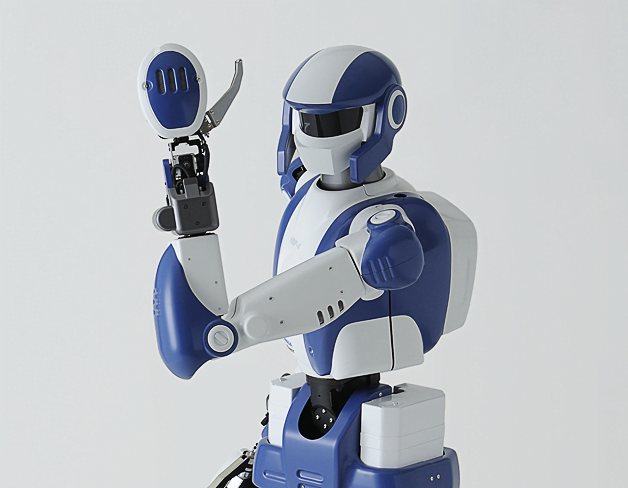 HRP-4Kawada Industries and AISTSame job: research · Both walk · Both past robots · Similar size HRP-4Kawada Industries and AISTSame job: research · Both walk · Both past robots · Similar size | 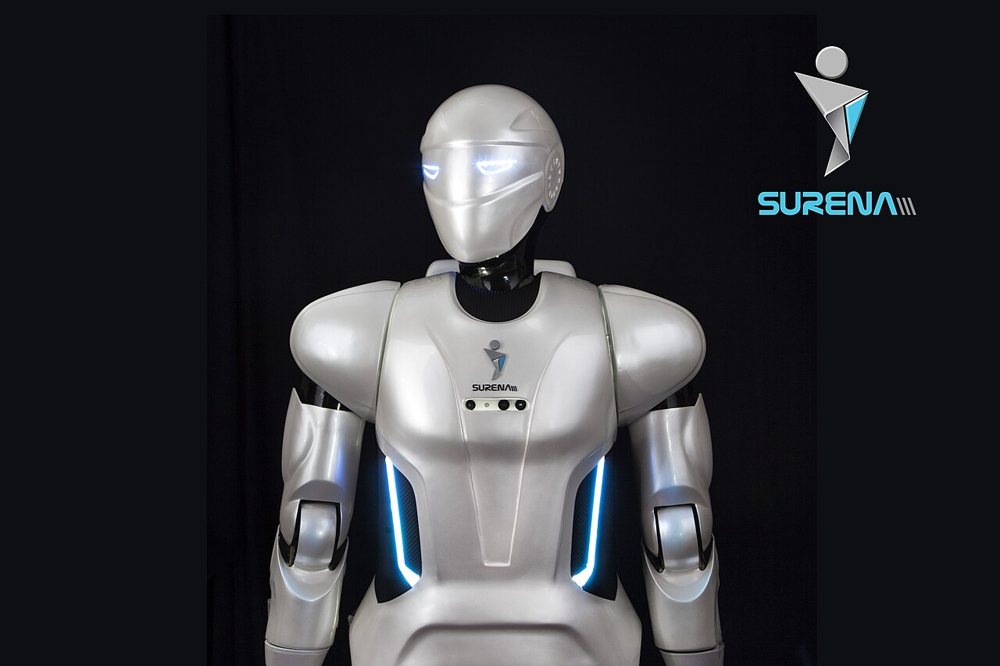 Surena IIIUniversity of Tehran, Center for Advanced Systems and Technologies (CAST)Same job: research · Both walk · Both past robots · Similar size Surena IIIUniversity of Tehran, Center for Advanced Systems and Technologies (CAST)Same job: research · Both walk · Both past robots · Similar size |
|---|---|---|---|---|
| First shown | 2012 | 2012-10 | 2010-09 | 2015-11 |
| Status | Retired | Retired | Discontinued | Retired |
| Height | 170 cm | 150 cm | 151 cm | 190 cm |
| Weight | 70 kg | 62 kg | 39 kg | 98 kg |
| Joints | 63 | 32 | 34 | 31 |
| Speed | — | — | — | — |
| Payload | — | — | — | — |
| Battery | — | — | — | — |
| Price | — | — | $305,000 | — |
Sources
Figures come from the maker. Every link below backs something on this page.
Photos and logos only identify each robot and its maker. Simbeing is not affiliated with, sponsored by or endorsing any company, and nothing here is advertising. Figures are for statistics only and are not advice of any kind. Terms of use