Sony Group Corporation · robot dog
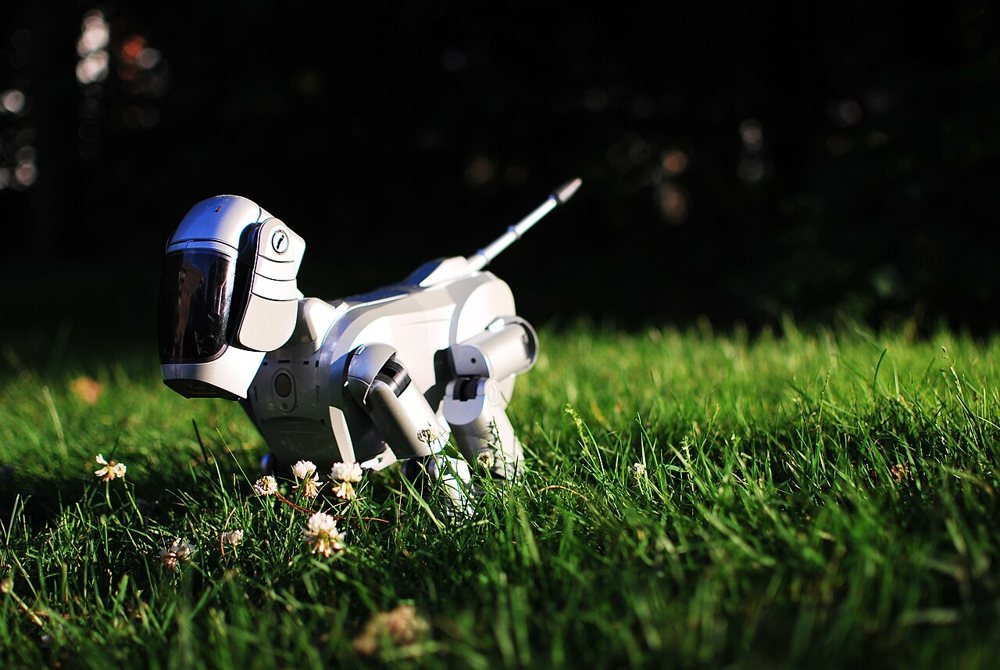
AIBO ERS-110
Sony's first AIBO robot dog, with 18 degrees of freedom and an approximate weight of 1.6 kg including battery and Memory Stick, announced in May 1999 as a limited online edition.
- Price
- $2,500Cheaper than 43%
- Height
- —Not published
- Weight
- 1.6 kgHeavier than 5%
- Payload
- —Not published
- Speed
- —Not published
- Battery
- —Not published
Not sure this is the one? Find the best robot for your job Starts with: help at home. Five more quick questions.
Why it matters
The IEEE recognises AIBO as the first mass-market consumer entertainment robot; the first run sold out online in about 20 minutes.
Real-world use
Limited run of 5,000 units (3,000 Japan, 2,000 US) sold from 1 June 1999.
Maker
Sony Group CorporationCompany · founded 1946 · Tokyo, Japanpublic company (TYO: 6758; NYSE: SONY)
How it stacks up
Against other robot dogs that publish the figure. Pick a measure.
AIBO ERS-110 is heavier than 5% of the 41 other robot dogs that publish a weight. Bars show the 7 closest in date.
AIBO ERS-110 has more joints than 91% of the 23 other robot dogs that publish a joints. Bars show the 7 closest in date.
AIBO ERS-110 costs less than 43% of the 21 other robot dogs that publish a price. Bars show the 7 closest in date.
Not published by the maker: height, speed, payload, battery.
Public attention
A historic robot: no longer sold or in use, so it is not ranked against current machines.
- 3,196 views of its Wikipedia article in the last 90 days (AIBO)
- 1 news story from reputable press listed on this page
Measures how much people read and write about a robot, not how good it is. Measured 2026-10-14; same method for every robot. How it is measured
What’s inside
The parts the company has talked about publicly.
- Movement
- Walks on legs · 18 joints
- How it runs
- Fully autonomous. In autonomous mode, it walked and reacted to its surroundings using its own programmed judgement; separate game and performance modes accepted user commands.
- Actuators & motors
- Small motors driving 18 joints in the legs, neck, tail and jaw (Sony's description); later models list 20 DoF.
- Sensors & vision
- Colour camera, range finder, microphones, touch sensors, acceleration and angular-velocity sensors.
- Compute
- 64-bit RISC processor with 16 MB RAM; Sony's Aperios real-time OS; software on Memory Stick.
- Battery & power
- Lithium-ion pack (about 1.5 hours of play per charge for early models).
- AI & software
- OPEN-R modular architecture; behaviours driven by instincts and emotions. A non-commercial OPEN-R SDK came later.
- Other details
- Designed by artist Hajime Sorayama; won Japan's Good Design Grand Prize. Used in RoboCup's four-legged league in 1999-2000.
Lineage
Every Sony machine in order.
- AIBO ERS-1101999Discontinued
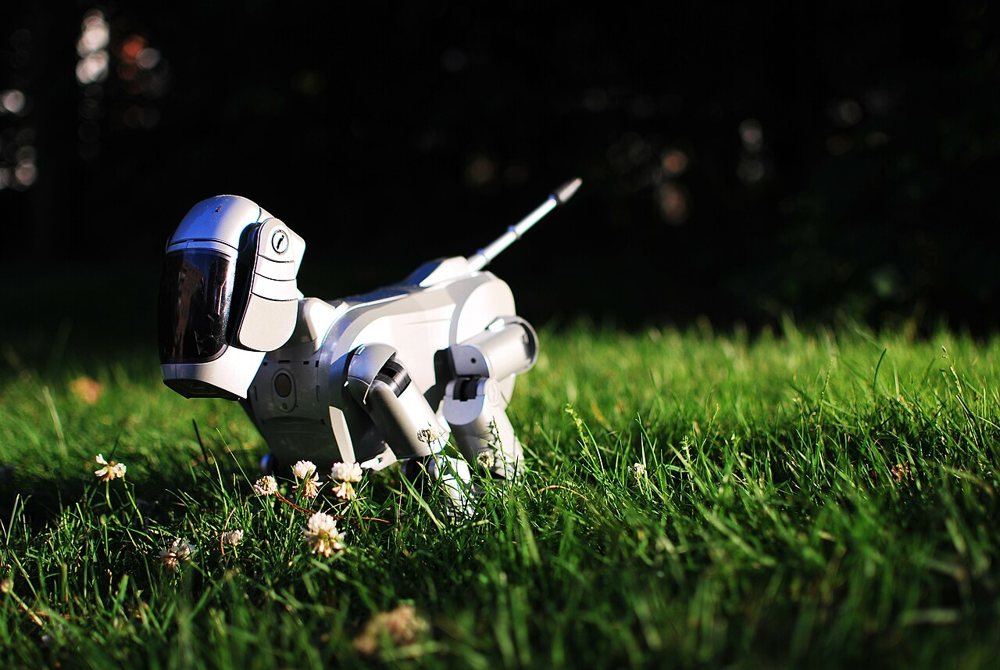 AIBO ERS-1111999Discontinued
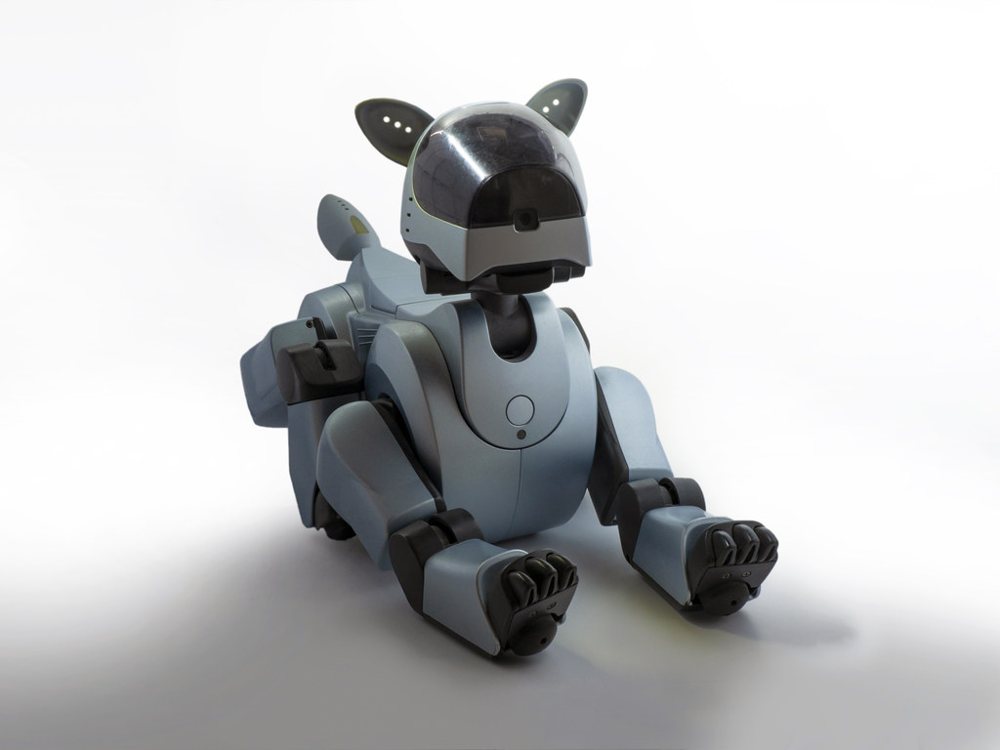 AIBO ERS-2102000Discontinued
 AIBO ERS-31x (Latte, Macaron, Pug)2001Discontinued
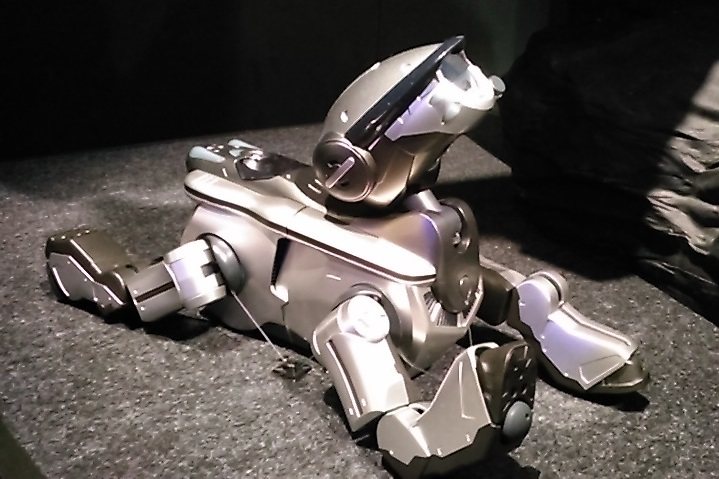 AIBO ERS-2202001Discontinued
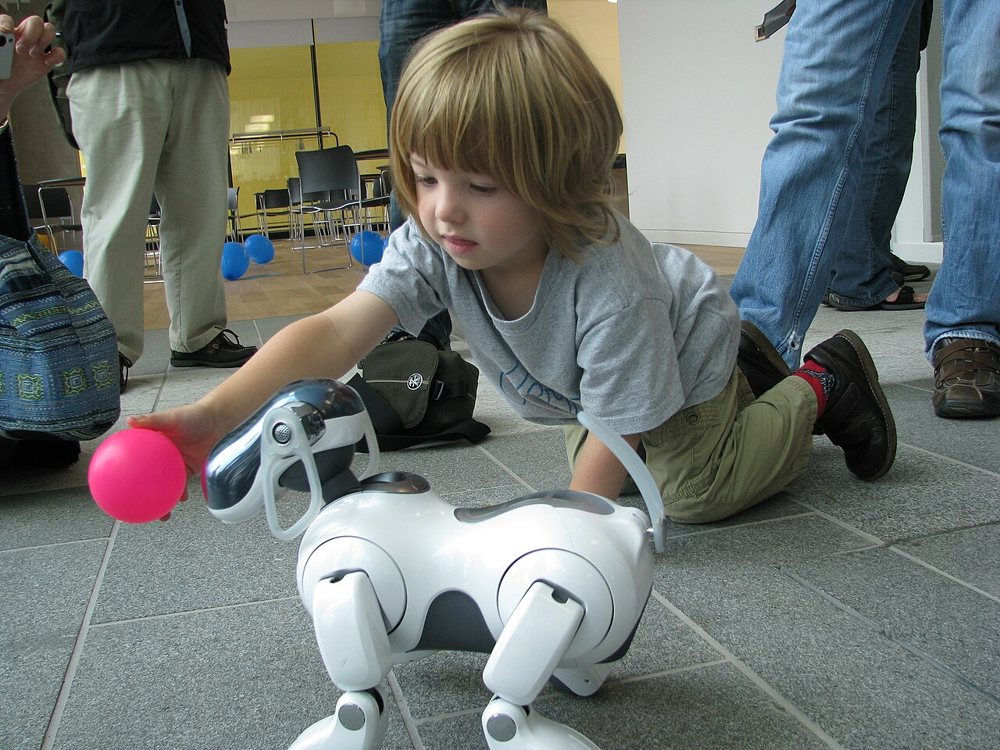 AIBO ERS-72003Discontinued
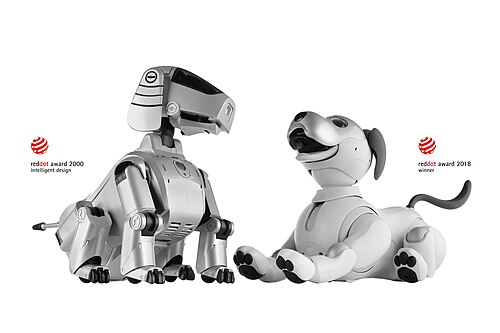 aibo ERS-10002017Commercial
Sony Group Corporation also makes 3 humanoids. See every Sony Group Corporation robot
Watch AIBO ERS-110
Made, sold and where
Unit counts are usually company figures; analysts often disagree.
- Price
- $2,500250,000 yen (about US$2,500) at launch
- How to get one
- No official buying page found
- Built
- 5,000 units (3,000 for Japan, 2,000 for the US)
- Sold or delivered
- Sold out; the Japanese allocation went in about 20 minutes on 1 June 1999. ERS-110 and ERS-111 together sold about 65,000
- Where it is sold or used
- Japan (Sony)
- Customers and pilots
- Consumers in Japan and the US; universities and RoboCup teams
News
The latest 1, newest first. Summaries are ours; tap through for the original.
- Sony ends Aibo repair service
IEEE Spectrum reported that Sony had stopped maintaining the original Aibo dogs, citing a lack of spare parts, leaving owners to independent repair shops.
IEEE Spectrum
Sources
Figures come from press coverage. Every link below backs something on this page.
Photos and logos only identify each robot and its maker. Simbeing is not affiliated with, sponsored by or endorsing any company, and nothing here is advertising. Figures are for statistics only and are not advice of any kind. Terms of use