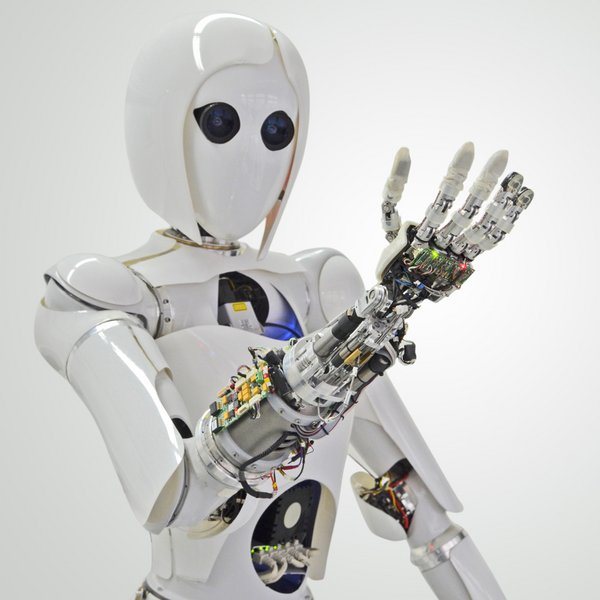
DFKI Robotics Innovation Center · research humanoid
AILA
Artificial Intelligence Lightweight Android
A female-styled humanoid torso on a wheeled base from Bremen's DFKI, used to study mobile manipulation, perception and AI, including tasks meant for future space-station work.
- Price
- —Not published
- Height
- 170 cmTaller than 59%
- Weight
- —Not published
- Payload
- —Not published
- Speed
- —Not published
- Battery
- —Not published
Not sure this is the one? Find the best robot for your job Starts with: research and teaching. Five more quick questions.
Why it matters
A retired humanoid from DFKI Robotics Innovation Center.
Real-world use
Research projects SemProM, Robofoot, BesMan, HySociaTea
Timeline
- First shown
- 2010
- Released
- Not yet
Maker
DFKI Robotics Innovation CenterGovernment lab · Bremen, GermanyFederal funds via DLR and BMBF for RH5 projects
How it stacks up
Against other humanoids that publish the figure. Pick a measure.
AILA (Artificial Intelligence Lightweight Android) is taller than 59% of the 305 other humanoids that publish a height. Bars show the 7 closest in date.
AILA (Artificial Intelligence Lightweight Android) has more joints than 54% of the 236 other humanoids that publish a joints. Bars show the 7 closest in date.
Not published by the maker: weight, speed, payload, battery, price.
Public attention
A historic robot: no longer sold or in use, so it is not ranked against current humanoids.
- No Wikipedia article of its own yet
- 3 news stories from reputable press listed on this page
Measures how much people read and write about a robot, not how good it is. Measured 2026-10-14; same method for every robot. How it is measured
What’s inside
The parts the company has talked about publicly.
- Movement
- Wheeled base · 32 joints
- Actuators & motors
- 14 brushless DC motors in the arms, 4 linear DC motors in the torso, 12 wheel motors, 2 head servos; in-house joint electronics (power, FPGA and sensor boards) on five CAN lines.
- Hands
- 9 active DoF per hand with tactile sensors; arm lifts up to 8 kg (payload-to-weight ratio above one was a design goal).
- Sensors & vision
- Two Prosilica GC780C stereo cameras in the head, Mesa SR-4000 time-of-flight camera in the belly, tilting Hokuyo URG short-range laser in the chest, two Hokuyo UTM long-range lasers in the base, two six-axis wrist force/torque sensors, Skyetek M4 RFID reader.
- Compute
- Two 3.5-inch embedded PCs (motion control in the head, navigation in the base) and a mini-ITX board with a graphics card for vision in the torso; FPGA controllers in each arm joint; Gigabit Ethernet.
- Battery & power
- 48 V 4.5 Ah nickel-metal-hydride battery; about 30 minutes of operation.
- Materials & build
- Carbon fibre, aluminium and steel.
- AI & software
- Linux; ROS for communication, Rock middleware and Roby high-level control; DFKI tools MARS, BOLeRo and NDLCom.
- Other details
- Six-wheel base with 2 DoF per wheel. DFKI counts 32 DoF without hands. Used in SemProM, Robofoot, BesMan and space-station mock-up teleoperation work.
Named suppliers:ROS (Open Robotics)Hokuyo
Lineage
Every DFKI Robotics Innovation Center humanoid in order.
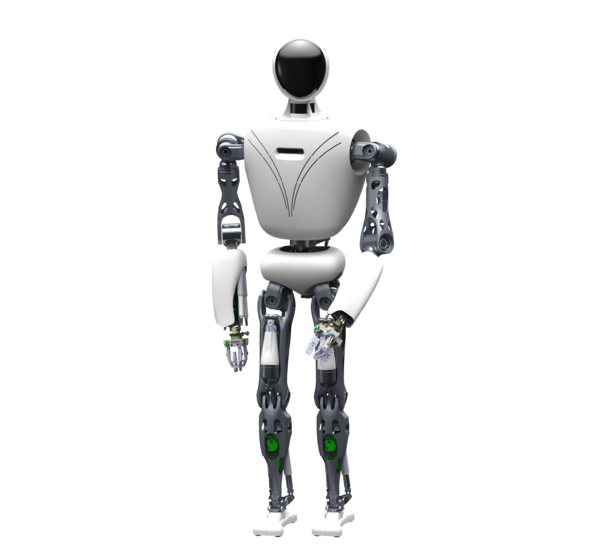
DFKI Robotics Innovation Center also makes 1 machine. See every DFKI Robotics Innovation Center robot
Made, sold and where
Unit counts are usually company figures; analysts often disagree.
- Price
- Not published
- How to get one
- No official buying page found
- Built
- 1 research robot
- Sold or delivered
- not sold
- Where it is sold or used
- DFKI Robotics Innovation Center, Bremen
- Customers and pilots
- Research projects SemProM, Robofoot, BesMan, HySociaTea
News
The latest 3, newest first. Summaries are ours; tap through for the original.
- AILA works in a space-station mock-up
DFKI showed the first official BesMan demonstration with AILA in its ISS mock-up.
DFKI Robotics Innovation Center - AILA teleoperated for space-station tasks
DFKI demonstrated Kinect-based and space-station teleoperation of AILA.
DFKI Robotics Innovation Center - AILA handles products by itself
DFKI showed AILA autonomously handling products using smart product memories in the SemProM project.
DFKI Robotics Innovation Center
Sources
Figures come from press coverage. Every link below backs something on this page.
Photos and logos only identify each robot and its maker. Simbeing is not affiliated with, sponsored by or endorsing any company, and nothing here is advertising. Figures are for statistics only and are not advice of any kind. Terms of use