Stanford Personal Robotics Program · research humanoid
PR1
Personal Robot One
A two-armed mobile manipulator with a stereo-camera head on a wheeled base, built as a general research platform for everyday human spaces. It is the direct predecessor of Willow Garage's PR2.
- Price
- —Not sold.
- Height
- 120 cmTaller than 12%
- Weight
- 98 kgHeavier than 82%
- Payload
- —Not published
- Speed
- 7.2 km/hFaster than 77%
- Battery
- —Not published
Not sure this is the one? Find the best robot for your job Starts with: help at home. Five more quick questions.
Why it matters
Its development helped start ROS, the Robot Operating System.
Real-world use
Stanford AI Robot (STAIR) team used it
Timeline
- Released
- Not yet
Maker
Stanford Personal Robotics ProgramUniversity lab · founded 2006 · Stanford, California, United StatesPrivate donors (first gift $50k from Joanna Hoffman and Alain Rossmann) plus Stanford matching funds; aimed to raise $4 million; later funded by…
How it stacks up
Against other humanoids that publish the figure. Pick a measure.
PR1 (Personal Robot One) is taller than 12% of the 305 other humanoids that publish a height. Bars show the 7 closest in date.
PR1 (Personal Robot One) is heavier than 82% of the 277 other humanoids that publish a weight. Bars show the 7 closest in date.
PR1 (Personal Robot One) is faster than 77% of the 122 other humanoids that publish a speed. Bars show the 7 closest in date.
PR1 (Personal Robot One) has more joints than 22% of the 236 other humanoids that publish a joints. Bars show the 7 closest in date.
Not published by the maker: payload, battery, price.
Public attention
A historic robot: no longer sold or in use, so it is not ranked against current humanoids.
- No Wikipedia article of its own yet
- 3 news stories from reputable press listed on this page
Measures how much people read and write about a robot, not how good it is. Measured 2026-10-14; same method for every robot. How it is measured
What’s inside
The parts the company has talked about publicly.
- Movement
- Wheeled base · 23 joints
- Actuators & motors
- 25 motors (type not stated); backdrivable arms with passive spring counterbalance; arms, grippers, head, telescoping spine and base controlled together at 1 kHz.
- Hands
- Simple 1-DoF grippers on 7-DoF arms (4 arm + 3 wrist DoF each).
- Sensors & vision
- Videre stereo camera system in the head; force control at every joint.
- Compute
- Two Pentium M small-form-factor computers on board.
- Battery & power
- 2 kW power system; 4-8 hours runtime depending mostly on computer load.
- Materials & build
- Plywood and aluminium.
- AI & software
- Early ROS (pre-1.0), which grew out of this project; much demo footage was teleoperated.
- Other details
- Designed as an intrinsically safe personal robot (ICRA 2008 paper cited by IEEE Spectrum). Testing by Stanford's AI robotics group broke it often, which pushed reliability work on PR2.
Named suppliers:ROS (Open Robotics)Intel
From the maker
PR1 (Personal Robot One) is the only humanoid from Stanford Personal Robotics Program (Keenan Wyrobek, Eric Berger) in the atlas.
Watch PR1 (Personal Robot One)
Made, sold and where
Unit counts are usually company figures; analysts often disagree.
- Price
- Not publishedNot sold.
- How to get one
- No official buying page found
- Built
- 1 known (PR1)
- Sold or delivered
- not sold
- Where it is sold or used
- Stanford University, California
- Customers and pilots
- Stanford AI Robot (STAIR) team used it
News
The latest 3, newest first. Summaries are ours; tap through for the original.
- Co-creator tells how PR1 led to ROS
Keenan Wyrobek wrote that PR1 and ROS were funded by donors from a 2006 pitch and that PR1 videos helped win support.
IEEE Spectrum - Spectrum revisits PR1 video
IEEE Spectrum's Video Friday showed the PR1 video and noted it as the forerunner of Willow Garage's PR2.
IEEE Spectrum - Bot Mitzvah
In late May 2010, Willow Garage celebrated 11 PR2 robots bound for research labs on two-year loans; PR2 grew from Stanford's PR1.
Stanford Magazine
Side by side with its peers
Picked by the same rules for every humanoid: another maker’s robot that moves the same way, is at the same stage and does at least one of the same main jobs, first shown within two years. Closer size and price rank higher. How we choose
| Measure | No public photo yetWe only show photos we're allowed to usePR1 (Personal Robot One)Stanford Personal Robotics Program (Keenan Wyrobek, Eric Berger) | 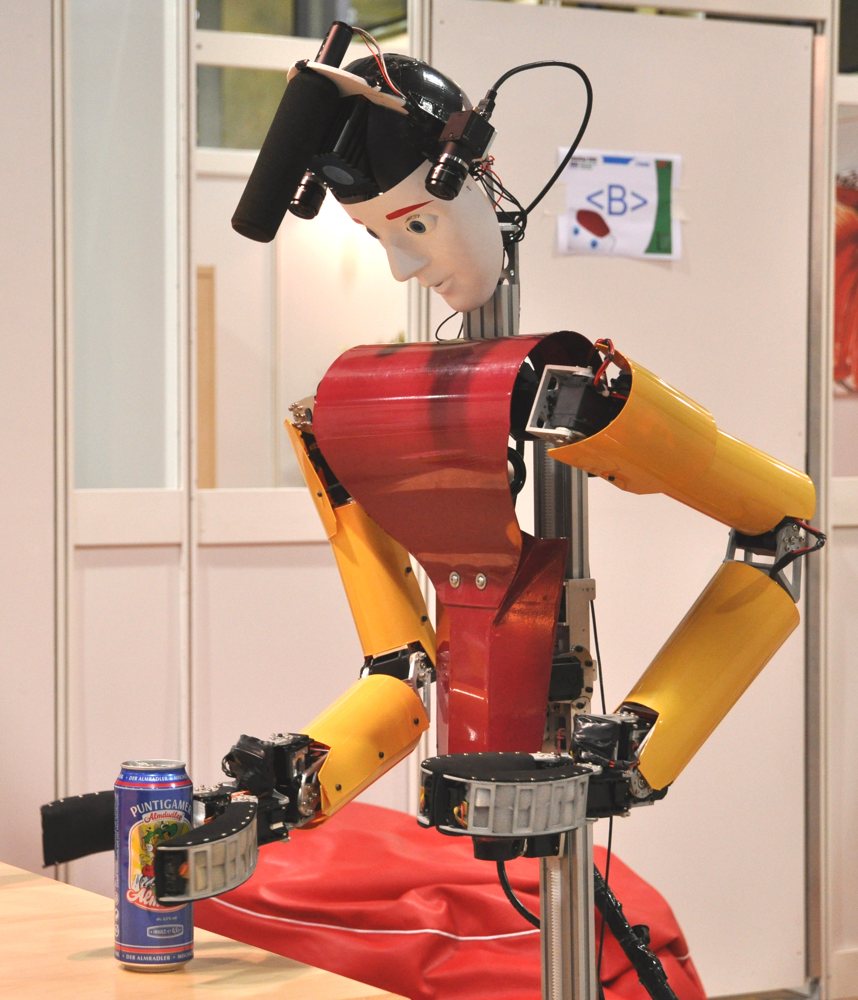 DynamaidUniversity of Bonn (Autonomous Intelligent Systems group, team NimbRo@Home)Same job: home · Both on wheels · Both past robots DynamaidUniversity of Bonn (Autonomous Intelligent Systems group, team NimbRo@Home)Same job: home · Both on wheels · Both past robots | 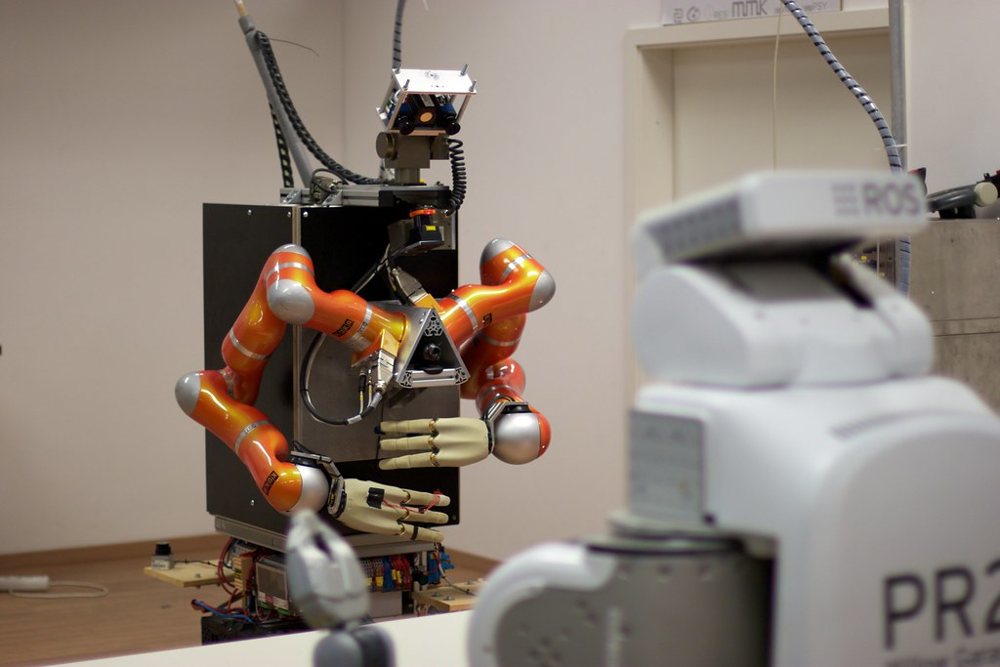 RosieTechnical University of MunichSame job: home · Both on wheels · Both past robots RosieTechnical University of MunichSame job: home · Both on wheels · Both past robots | 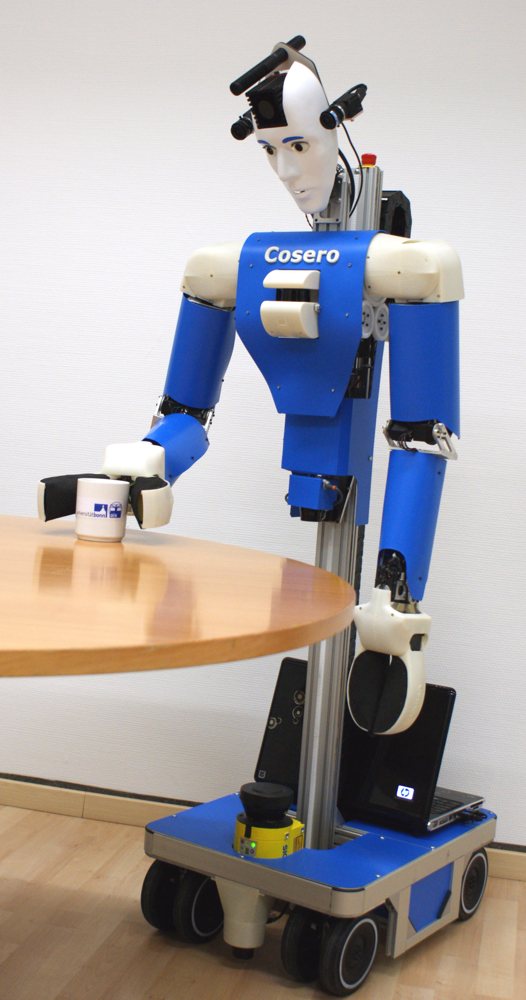 CoseroUniversity of Bonn (Autonomous Intelligent Systems group, team NimbRo@Home)Same job: home · Both on wheels · Both past robots CoseroUniversity of Bonn (Autonomous Intelligent Systems group, team NimbRo@Home)Same job: home · Both on wheels · Both past robots |
|---|---|---|---|---|
| First shown | 2008 | 2009-04 | 2009 | 2010-09 |
| Status | Retired | Retired | Retired | Retired |
| Height | 120 cm | — | — | — |
| Weight | 98 kg | — | — | — |
| Joints | 23 | 30 | — | 30 |
| Speed | 7.2 km/h | — | — | — |
| Payload | — | 1 kg | — | — |
| Battery | — | — | — | — |
| Price | — | — | — | — |
Sources
Figures come from press coverage. Every link below backs something on this page.
Photos and logos only identify each robot and its maker. Simbeing is not affiliated with, sponsored by or endorsing any company, and nothing here is advertising. Figures are for statistics only and are not advice of any kind. Terms of use