Chips & AI
The chips and AI inside the robots
69 chips and boards from 24 companies, linked to 94 robot and vehicle models in the atlas, plus 41 AI models and 33 export-control and policy events. Every link has a public source.
Statistics only, not advice. No affiliation, sponsorship or endorsement. How we work · Terms
Browse every chip and board
Open any chip for its full profile: specs, the robots that use it, its family and its rivals. Compute is the maker's headline figure at the precision stated, so INT8 and FP4 numbers are not directly comparable.
- Vehicle computers2027 AI5Tesla —Not published (Tesla claims about 10x AI4) Used in 1 robot model
- Robot modules2026 Jetson T4000NVIDIA 1,200 TFLOPSFP4 (sparse) · 40-70 W Used in 1 robot model
- Robot modules2026 Jetson T3000NVIDIA 865 TFLOPSFP4 (reported as sparse by ServeTheHome) · about 65-70 W (reports differ) No robot named yet
- Robot modules2026 Jetson T2000NVIDIA 400 TFLOPSFP4 No robot named yet
 Robot chips2026
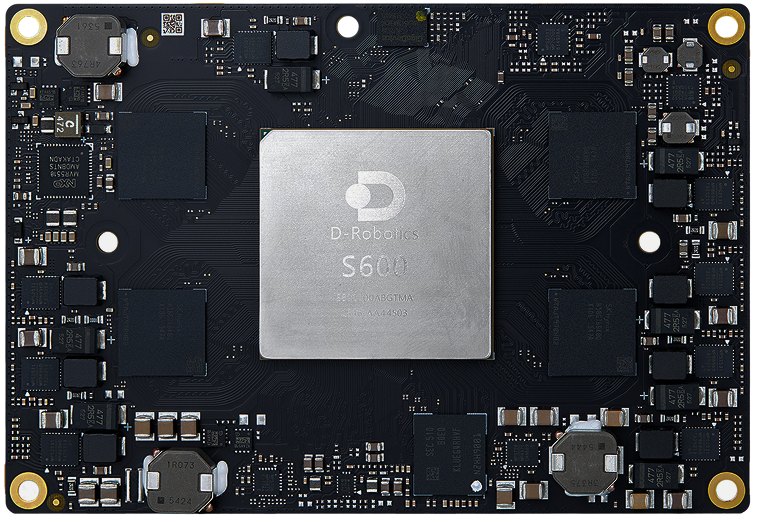
RDK S600 / Sunrise S600D-Robotics
560 TOPSINT8
No robot named yet
Robot chips2026
RDK S600 / Sunrise S600D-Robotics
560 TOPSINT8
No robot named yet 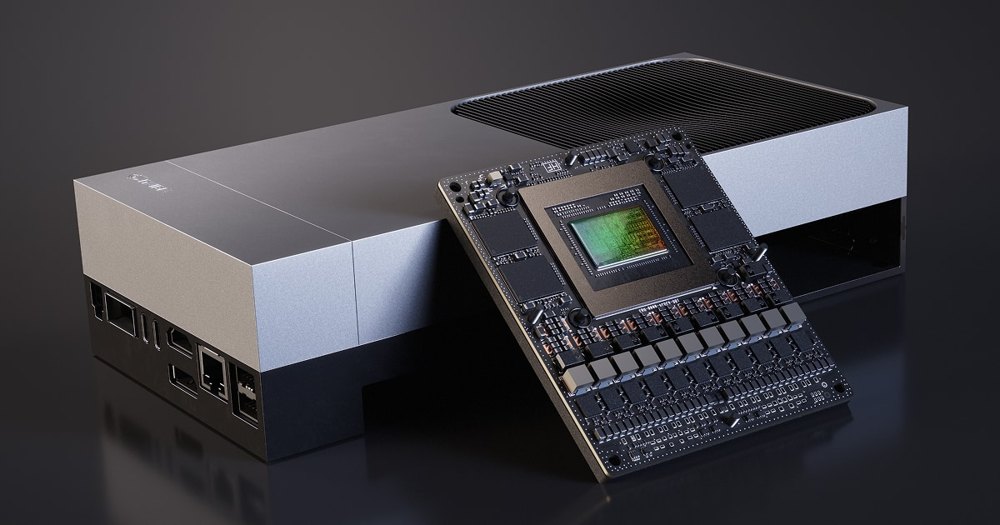 Robot modules2025
Jetson AGX Thor (T5000)NVIDIA
2,070 TFLOPSFP4 (sparse) · 40-130 W
Used in 16 robot models
Robot modules2025
Jetson AGX Thor (T5000)NVIDIA
2,070 TFLOPSFP4 (sparse) · 40-130 W
Used in 16 robot models - Vehicle computers2025 DRIVE AGX ThorNVIDIA 1,000 TOPSINT8 (sparse) per SoC Used in 4 robot models
 Robot modules2025
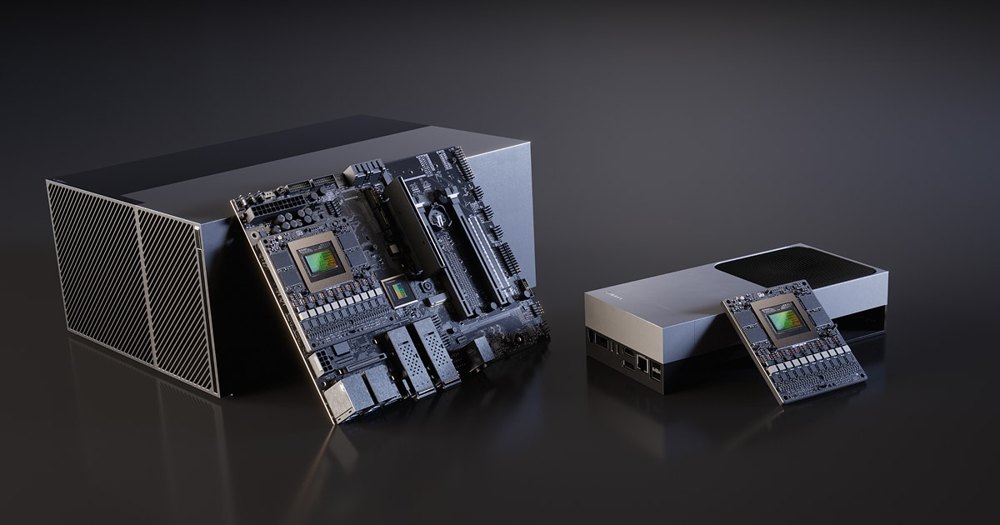
IGX ThorNVIDIA
—Thor-class Blackwell compute with functional-safety support
Used in 2 robot models
Robot modules2025
IGX ThorNVIDIA
—Thor-class Blackwell compute with functional-safety support
Used in 2 robot models 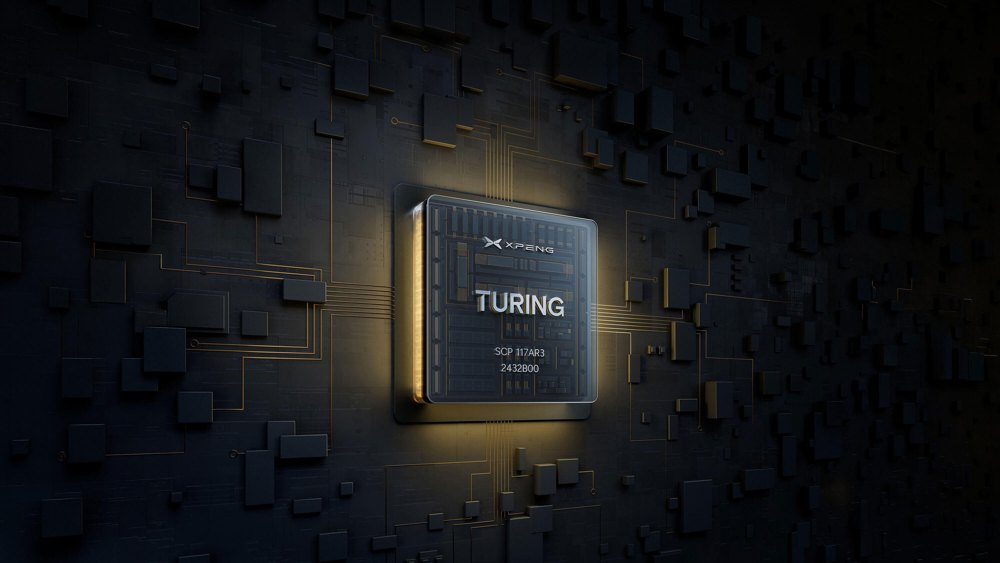 Robot chips2025
Turing AI chipXPeng
750 TOPSeffective per chip (XPeng)
Used in 2 robot models
Robot chips2025
Turing AI chipXPeng
750 TOPSeffective per chip (XPeng)
Used in 2 robot models - Vehicle computers2025 EyeQ6 (Lite and High)Mobileye 5 TOPSLite) to 34 TOPS (High · 7 nm No robot named yet
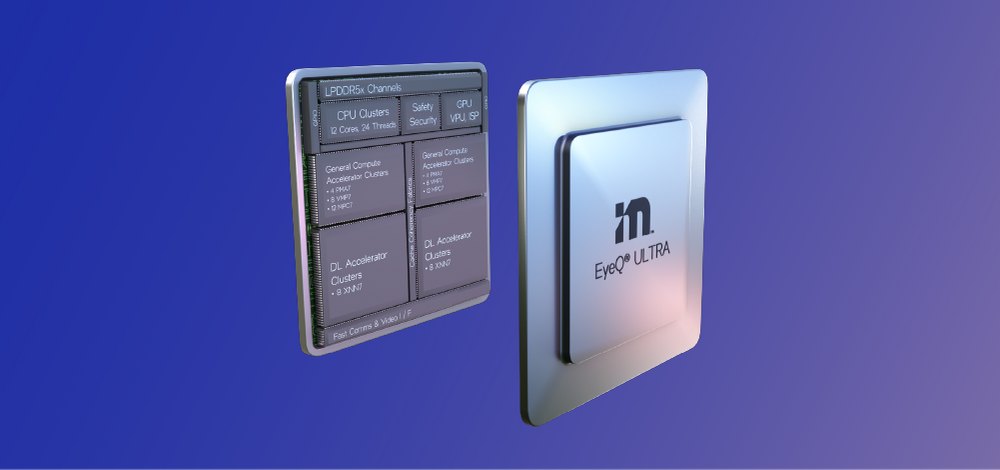 Vehicle computers2025
EyeQ UltraMobileye
176 TOPSINT8 · 5 nm
No robot named yet
Vehicle computers2025
EyeQ UltraMobileye
176 TOPSINT8 · 5 nm
No robot named yet - Vehicle computers2025 Journey 6PHorizon Robotics 560 TOPSeffective, with sparsity · 7 nm · TSMC No robot named yet
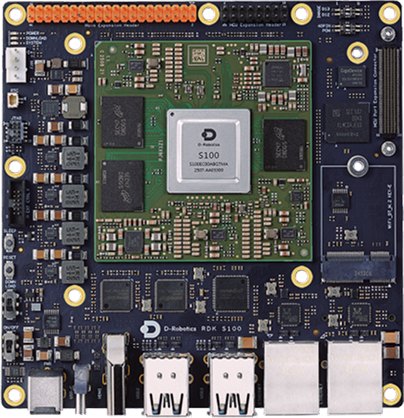 Robot modules2025
RDK S100 / S100PD-Robotics
80 TOPSS100) or 128 TOPS (S100P
No robot named yet
Robot modules2025
RDK S100 / S100PD-Robotics
80 TOPSS100) or 128 TOPS (S100P
No robot named yet 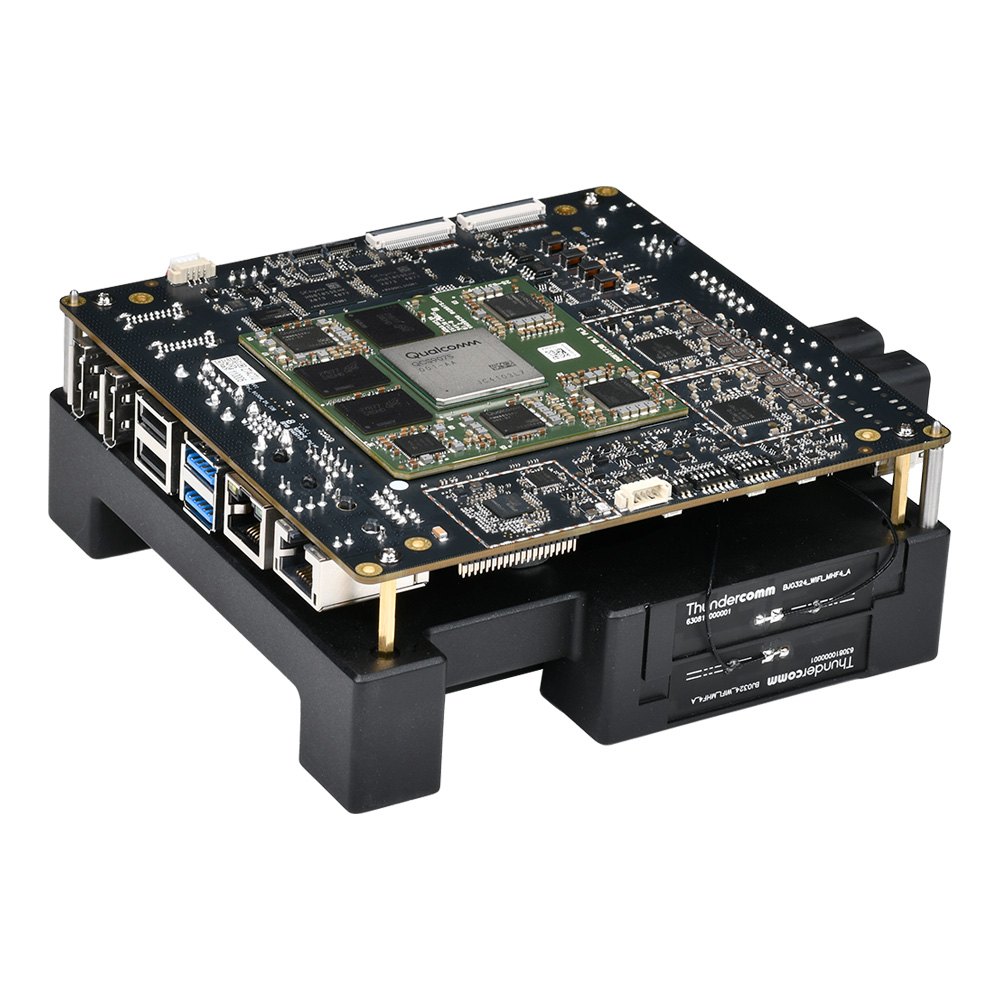 Robot chips2024
Dragonwing IQ-9075Qualcomm
100 TOPSINT8 dense (200 sparse)
Used in 1 robot model
Robot chips2024
Dragonwing IQ-9075Qualcomm
100 TOPSINT8 dense (200 sparse)
Used in 1 robot model 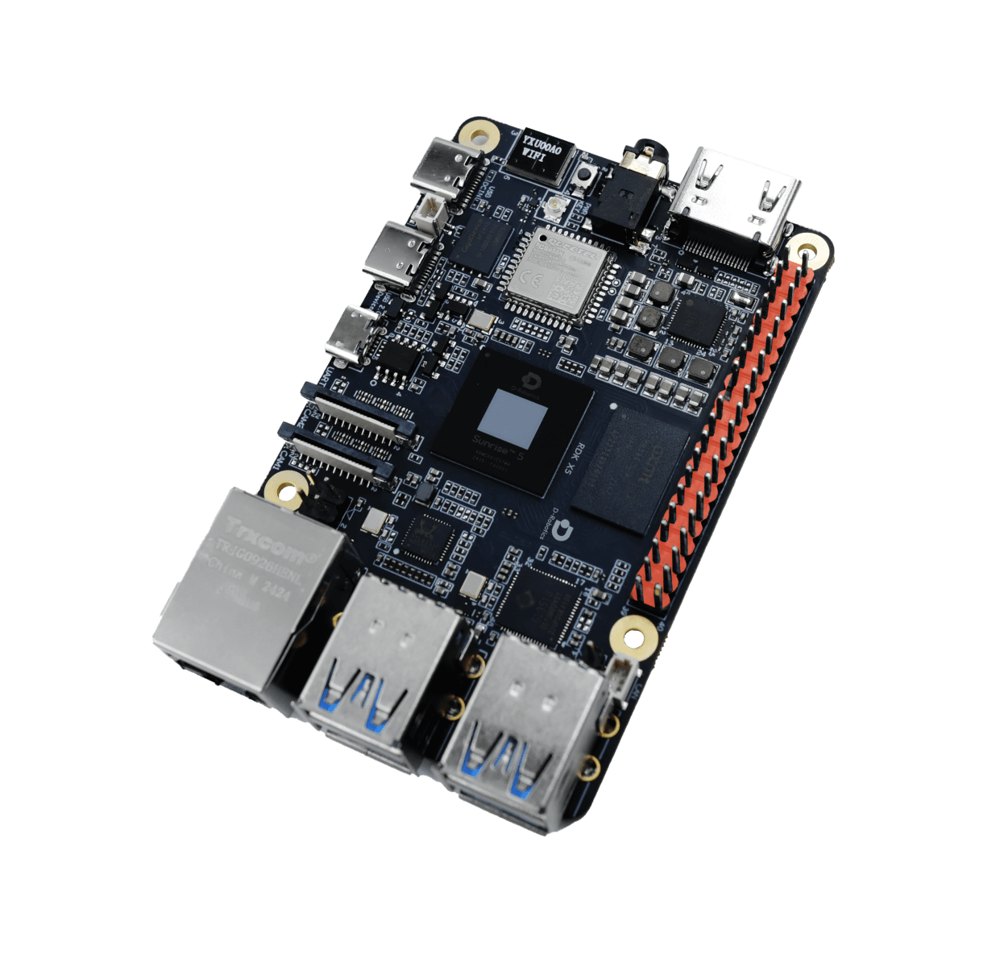 Robot modules2024
RDK X5 (Sunrise 5)D-Robotics
10 TOPSINT8
Used in 1 robot model
Robot modules2024
RDK X5 (Sunrise 5)D-Robotics
10 TOPSINT8
Used in 1 robot model - Vehicle computers2024 Huashan A2000 familyBlack Sesame Technologies —Not published as a single figure (about 4x A1000, per the company) No robot named yet
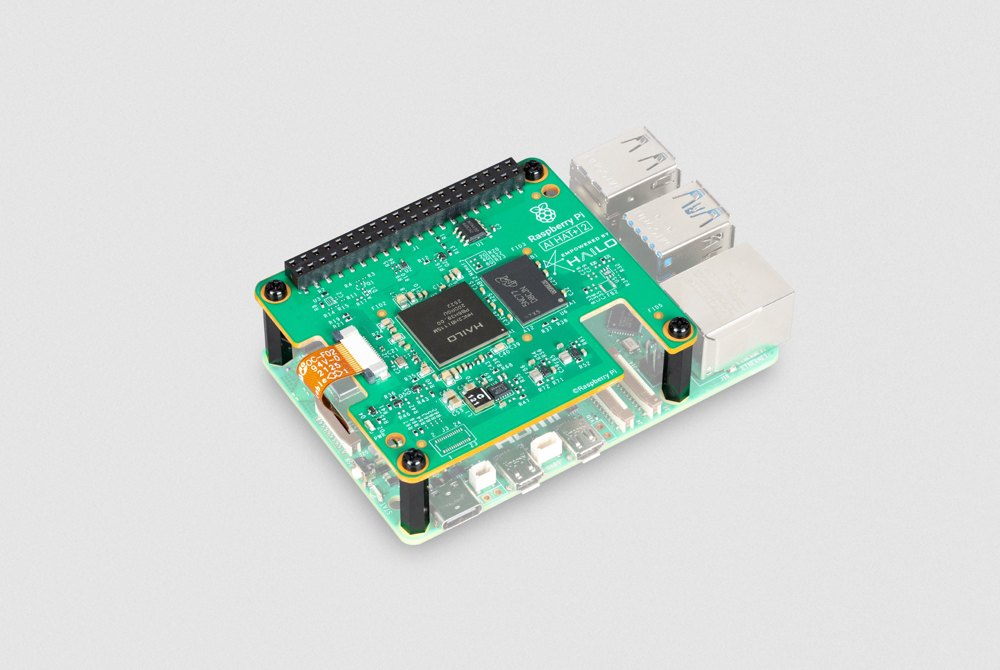 AI accelerators2024
Hailo-10HHailo
40 TOPSINT4
No robot named yet
AI accelerators2024
Hailo-10HHailo
40 TOPSINT4
No robot named yet 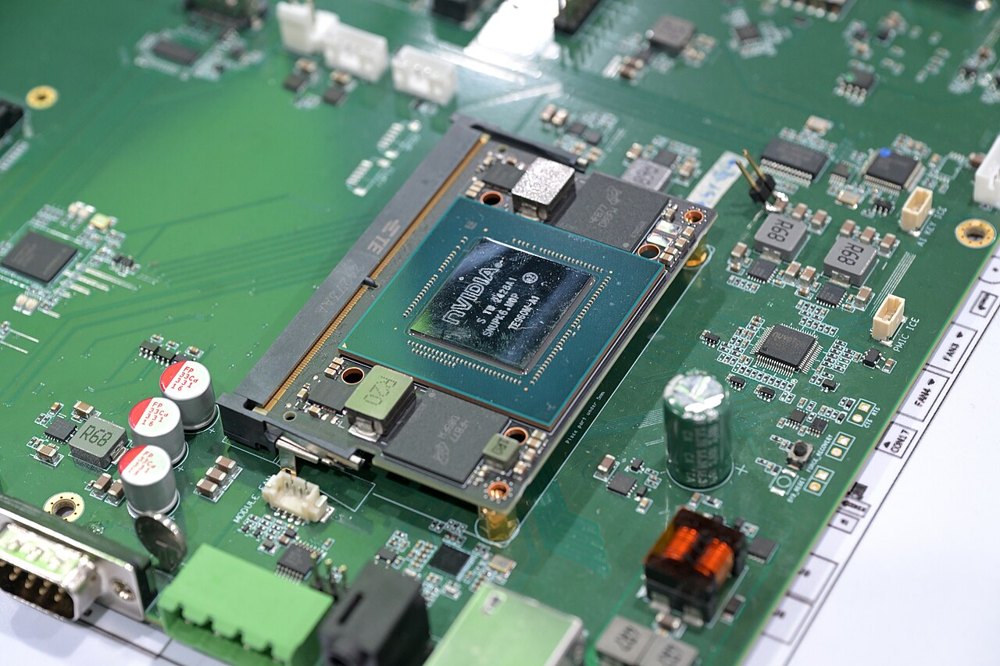 Robot modules2023
Jetson Orin NXNVIDIA
117-157 TOPSINT8 (sparse) · 10-40 W · 8 nm · Samsung
Used in 15 robot models
Robot modules2023
Jetson Orin NXNVIDIA
117-157 TOPSINT8 (sparse) · 10-40 W · 8 nm · Samsung
Used in 15 robot models 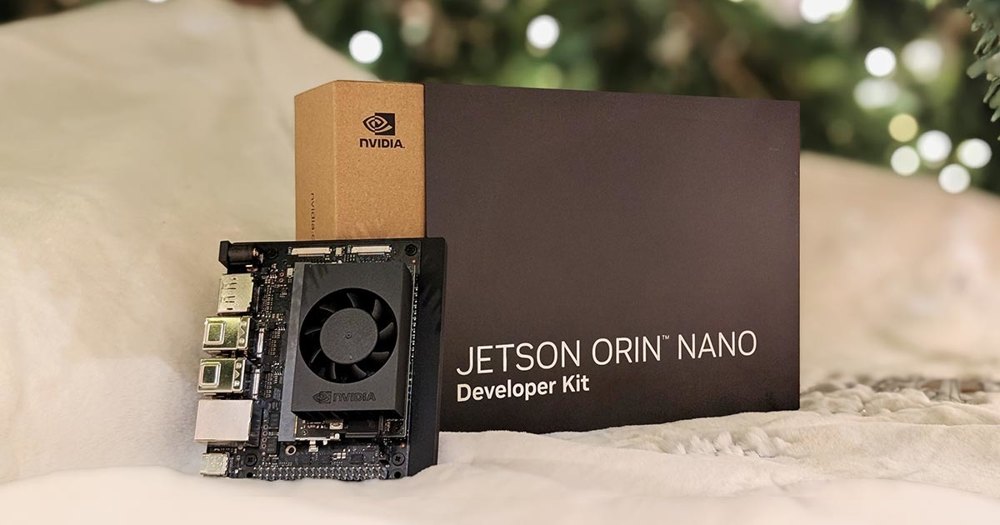 Robot modules2023
Jetson Orin Nano (incl. Super)NVIDIA
34-67 TOPSINT8 (sparse) · 7-25 W · 8 nm · Samsung
Used in 5 robot models
Robot modules2023
Jetson Orin Nano (incl. Super)NVIDIA
34-67 TOPSINT8 (sparse) · 7-25 W · 8 nm · Samsung
Used in 5 robot models 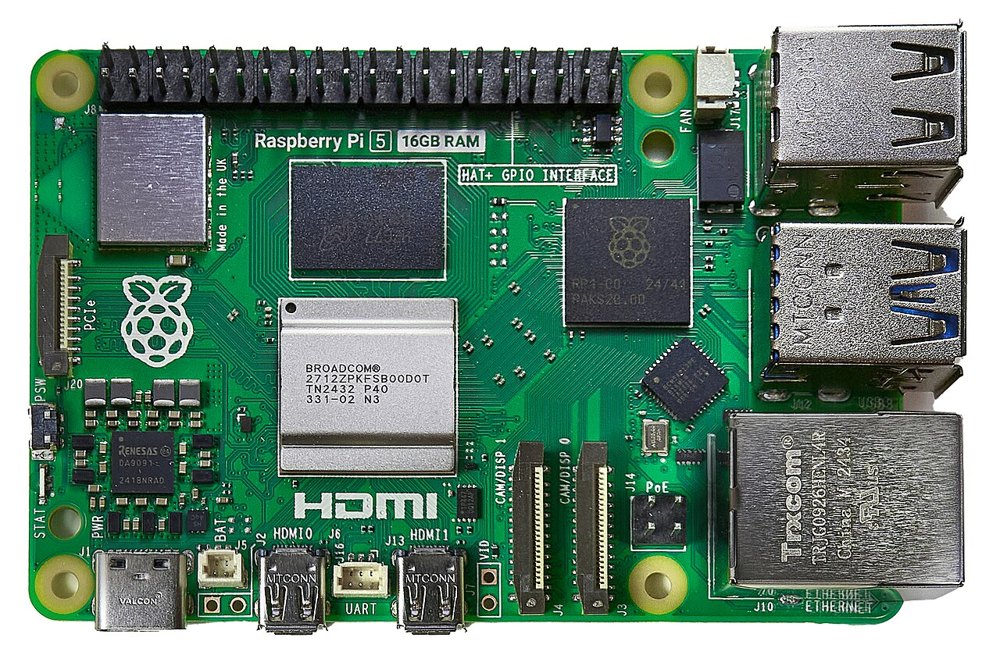 CPUs2023
Raspberry Pi 5 (BCM2712)Raspberry Pi / Broadcom
—Quad-core Cortex-A76 at 2.4 GHz
Used in 2 robot models
CPUs2023
Raspberry Pi 5 (BCM2712)Raspberry Pi / Broadcom
—Quad-core Cortex-A76 at 2.4 GHz
Used in 2 robot models - Vehicle computers2023 AI4 / FSD Computer 2 (Hardware 4)Tesla —Not published Used in 1 robot model
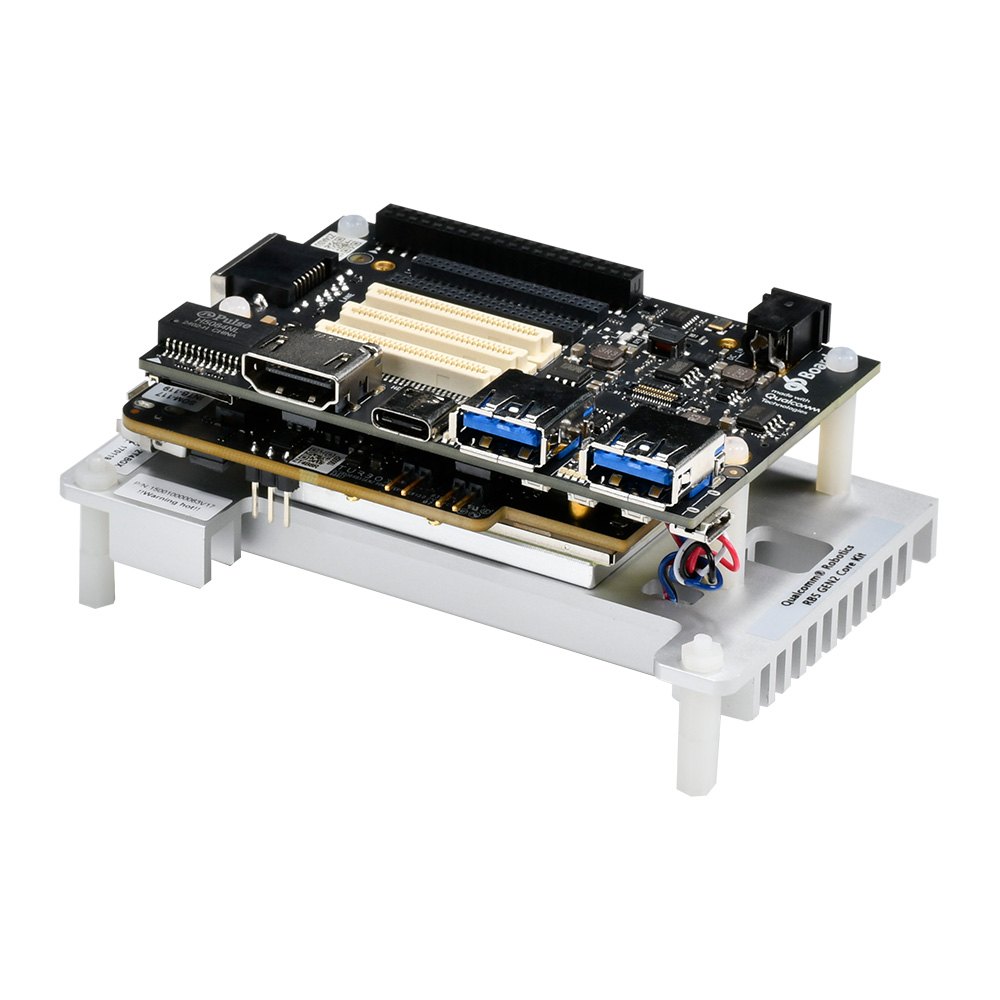 Robot chips2023
QCS8550Qualcomm
48 TOPSINT8
Used in 1 robot model
Robot chips2023
QCS8550Qualcomm
48 TOPSINT8
Used in 1 robot model - CPUs2023 Core i7-13700HIntel —14-core x86 up to 5.0 GHz Used in 1 robot model
- CPUs2023 Processor N97Intel —Quad-core x86 up to 3.6 GHz Used in 1 robot model
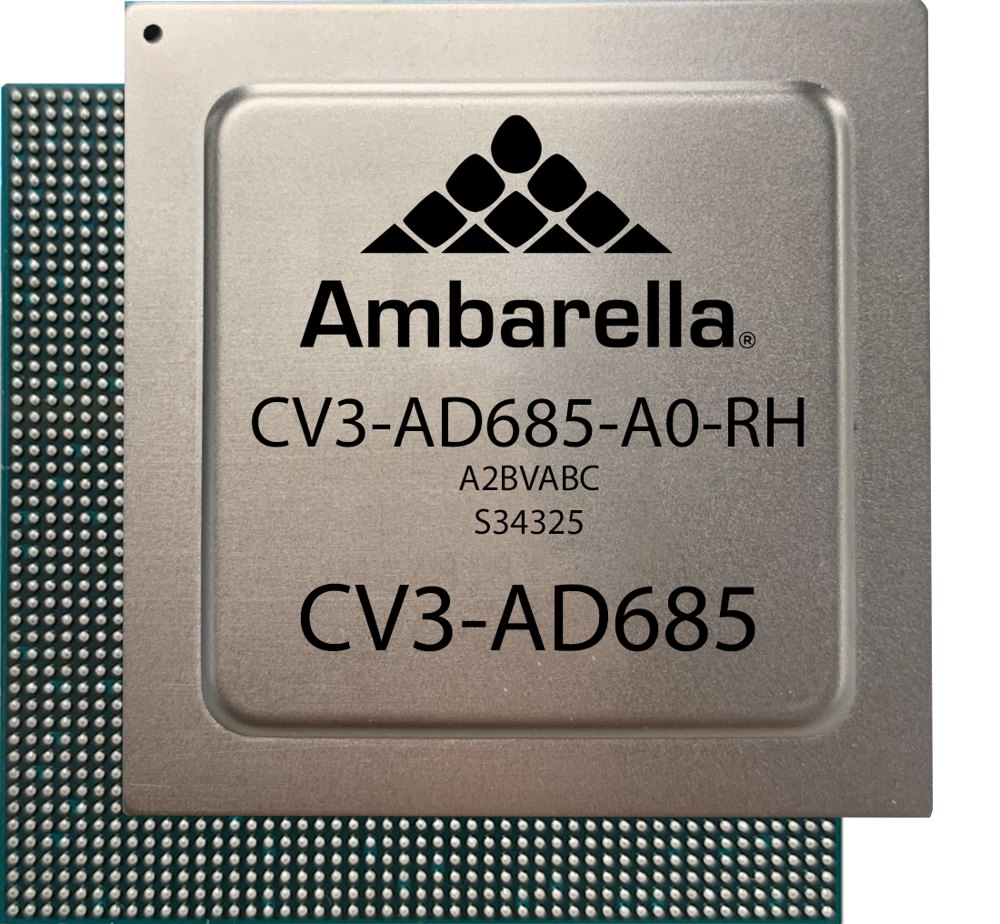 Vehicle computers2023
CV3-AD685Ambarella
—About 20x the neural performance of CV2 (company claim)
Used in 1 robot model
Vehicle computers2023
CV3-AD685Ambarella
—About 20x the neural performance of CV2 (company claim)
Used in 1 robot model 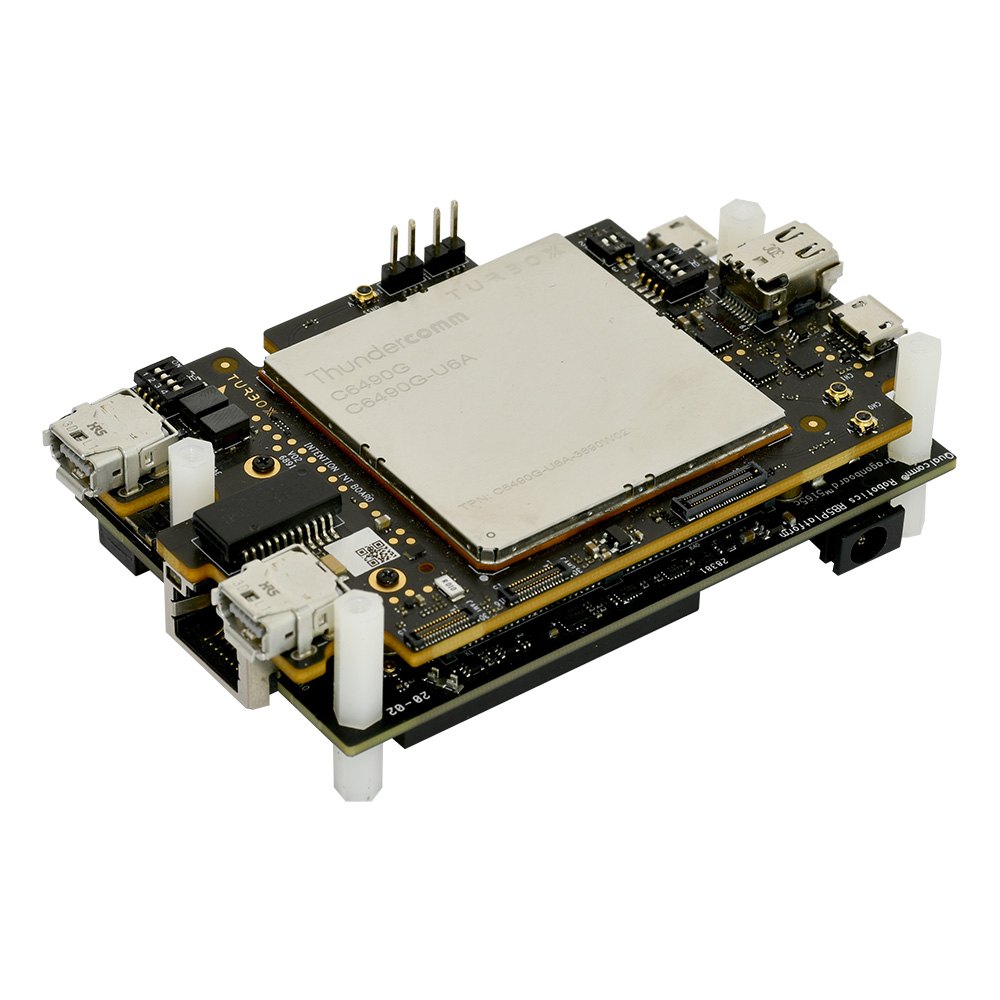 Robot chips2023
QCS6490 (RB3 Gen 2)Qualcomm
12 TOPSINT8
No robot named yet
Robot chips2023
QCS6490 (RB3 Gen 2)Qualcomm
12 TOPSINT8
No robot named yet 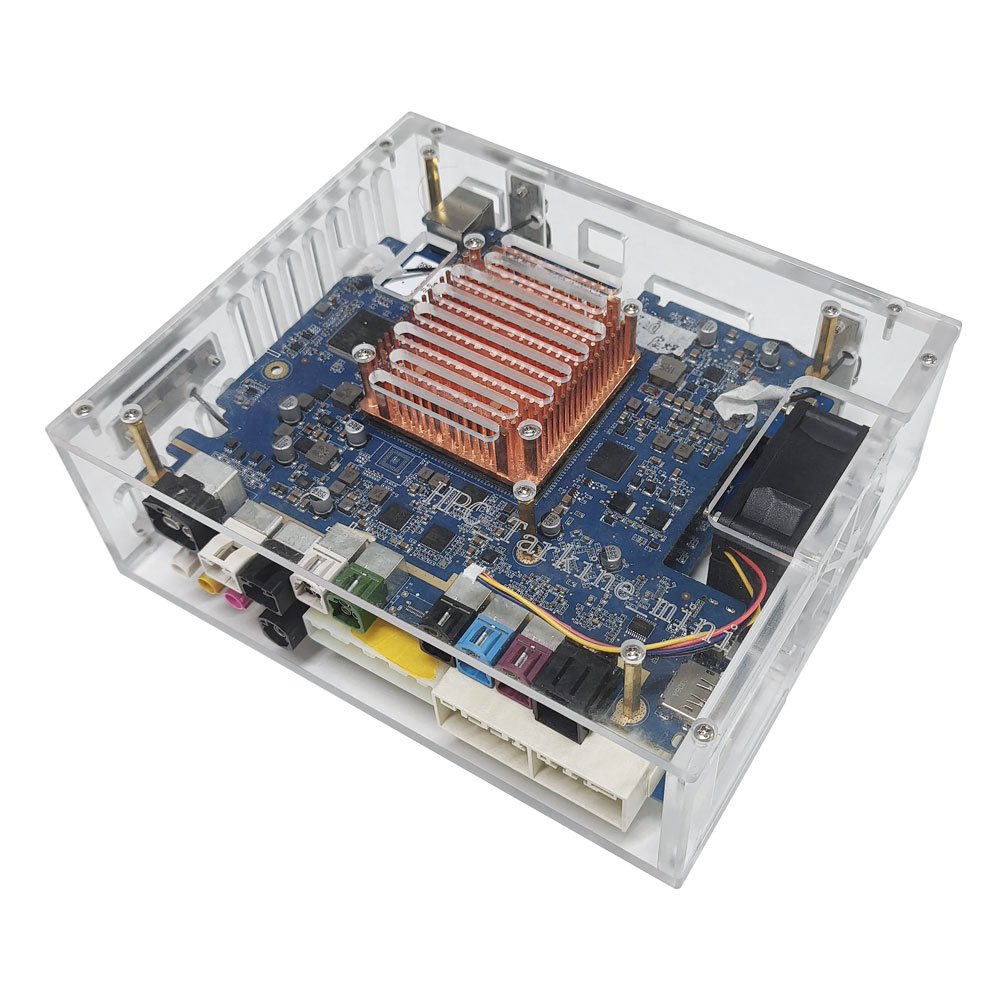 Vehicle computers2023
Snapdragon Ride Flex (SA8775P)Qualcomm
16-24 TOPSreported for early Flex SoCs
No robot named yet
Vehicle computers2023
Snapdragon Ride Flex (SA8775P)Qualcomm
16-24 TOPSreported for early Flex SoCs
No robot named yet - CPUs2023 Ryzen 7 7840 series (Radeon 780M)AMD —8 Zen 4 cores with Radeon 780M graphics No robot named yet
- Vehicle computers2023 Wudang C1296Black Sesame Technologies —Not published No robot named yet
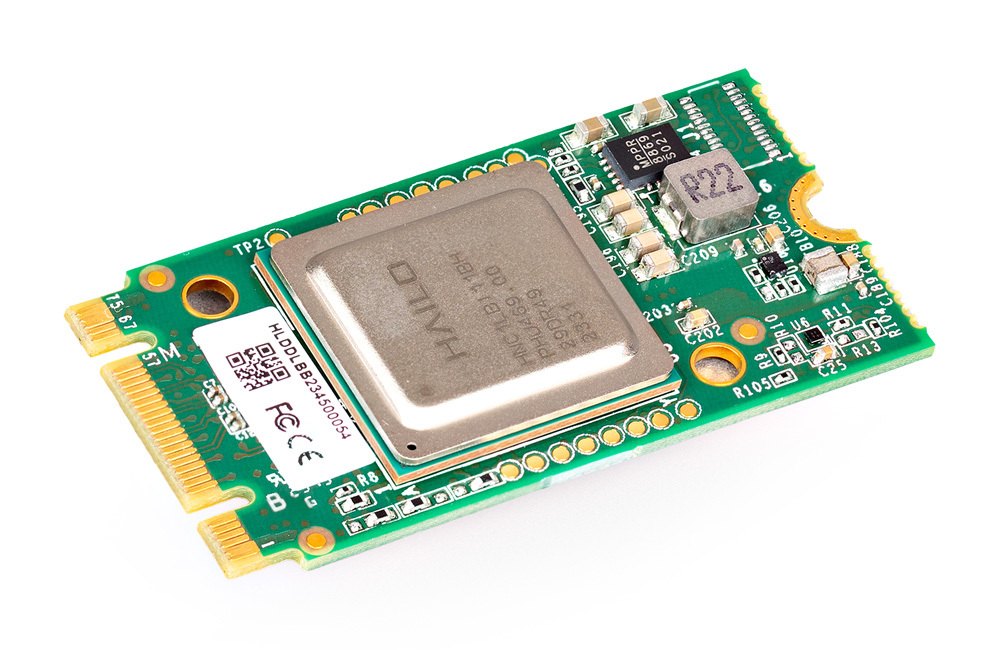 AI accelerators2023
Hailo-8LHailo
13 TOPSINT8
No robot named yet
AI accelerators2023
Hailo-8LHailo
13 TOPSINT8
No robot named yet 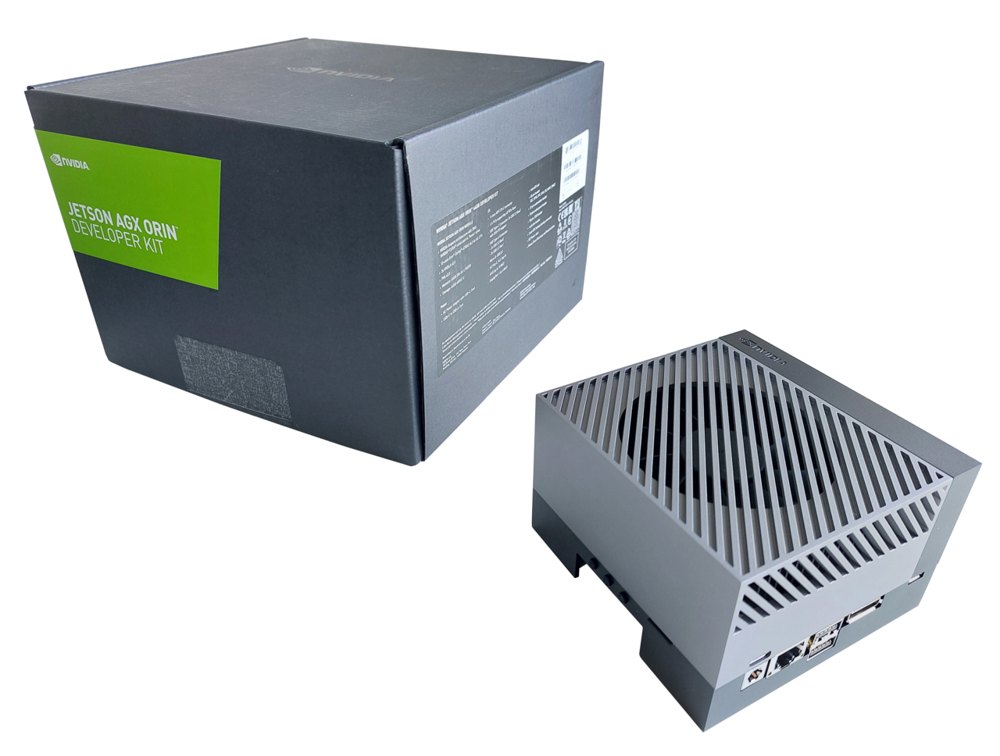 Robot modules2022
Jetson AGX OrinNVIDIA
200-275 TOPSINT8 (sparse) · 15-60 W · 8 nm · Samsung
Used in 20 robot models
Robot modules2022
Jetson AGX OrinNVIDIA
200-275 TOPSINT8 (sparse) · 15-60 W · 8 nm · Samsung
Used in 20 robot models 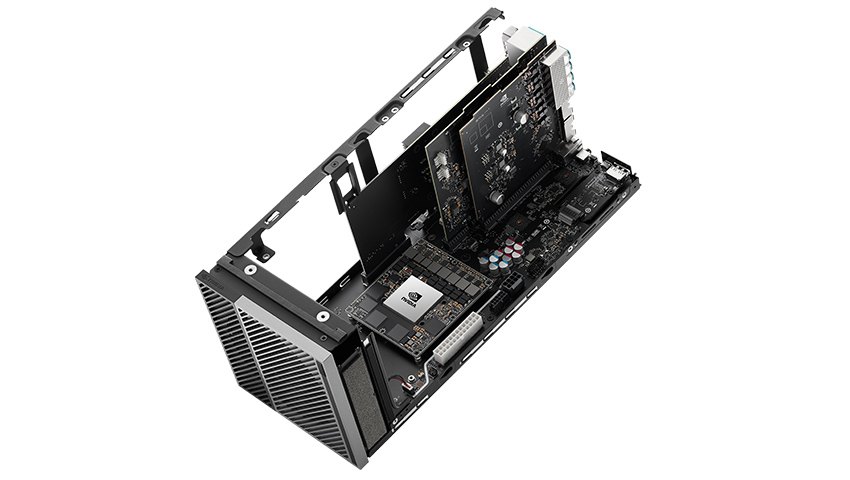 Vehicle computers2022
DRIVE AGX OrinNVIDIA
254 TOPSINT8 per SoC · 8 nm · Samsung
Used in 8 robot models
Vehicle computers2022
DRIVE AGX OrinNVIDIA
254 TOPSINT8 per SoC · 8 nm · Samsung
Used in 8 robot models 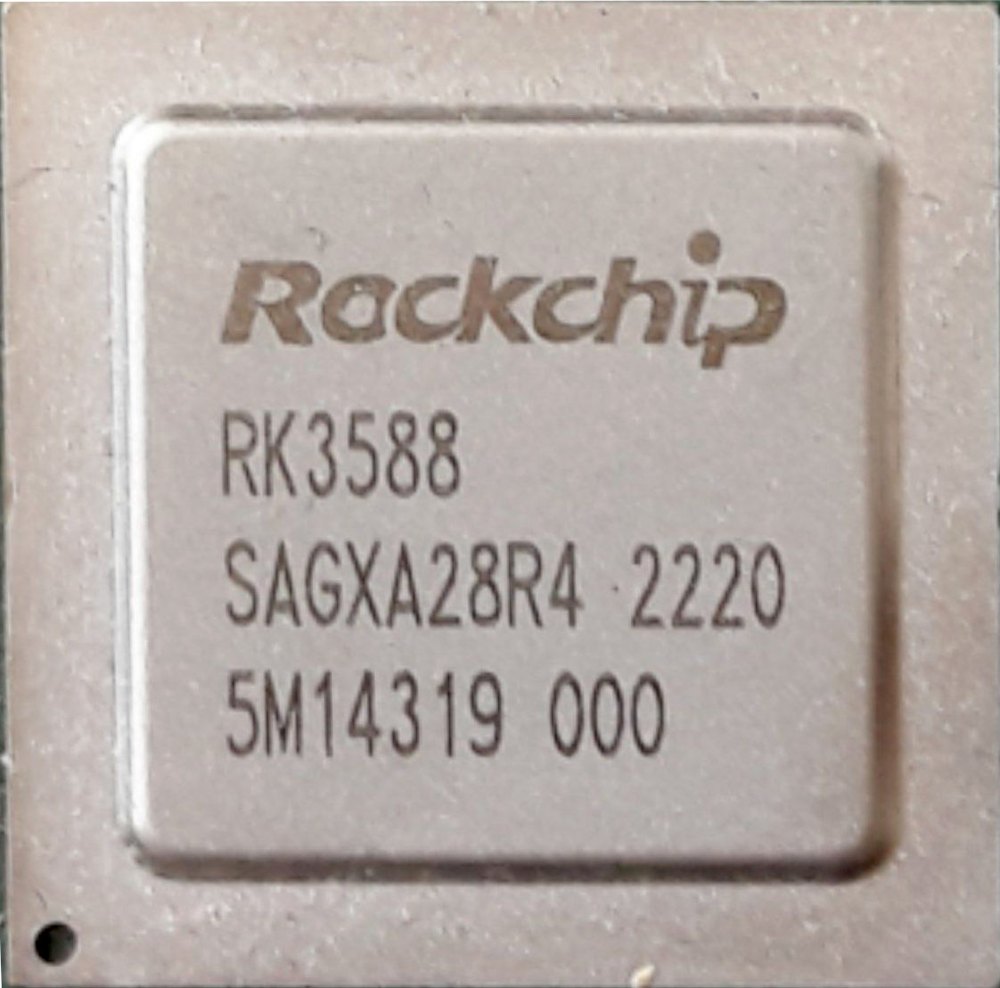 Robot chips2022
RK3588Rockchip
6 TOPSNPU (INT4/INT8/INT16/FP16) · 8 nm
Used in 5 robot models
Robot chips2022
RK3588Rockchip
6 TOPSNPU (INT4/INT8/INT16/FP16) · 8 nm
Used in 5 robot models - CPUs2022 Ryzen Embedded V3000AMD —Up to 8 Zen 3 cores Used in 1 robot model
- Vehicle computers2021 Mobileye Drive (self-driving system)Mobileye —Multiple EyeQ chips; total not published by Mobileye Used in 4 robot models
 AI accelerators2021
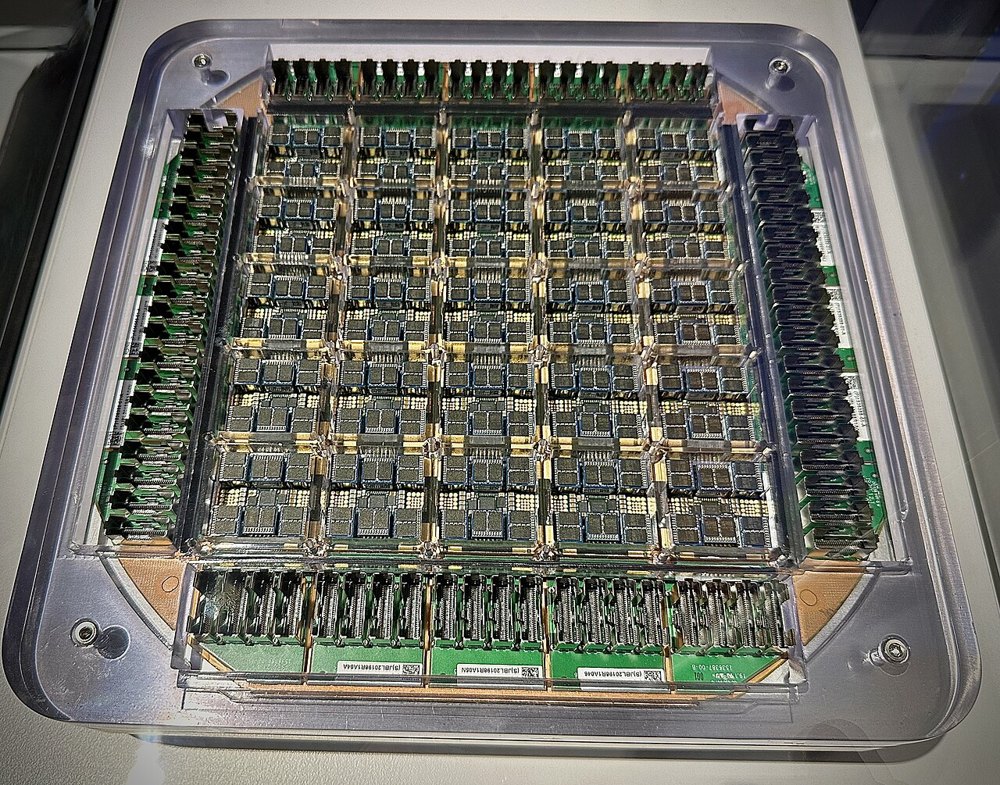
Dojo D1Tesla
—354 custom cores per die; training chip
No robot named yet
AI accelerators2021
Dojo D1Tesla
—354 custom cores per die; training chip
No robot named yet - Vehicle computers2021 EyeQ5Mobileye 4.6-16 TOPSMid and High versions · 7 nm No robot named yet
- AI accelerators2021 Versal AI EdgeAMD —Adaptive SoC: FPGA fabric, Arm cores and AI Engine-ML tiles No robot named yet
- Robot modules2021 Kria K26 SOMAMD —Zynq UltraScale+ MPSoC module with FPGA vision acceleration No robot named yet
 Vehicle computers2021
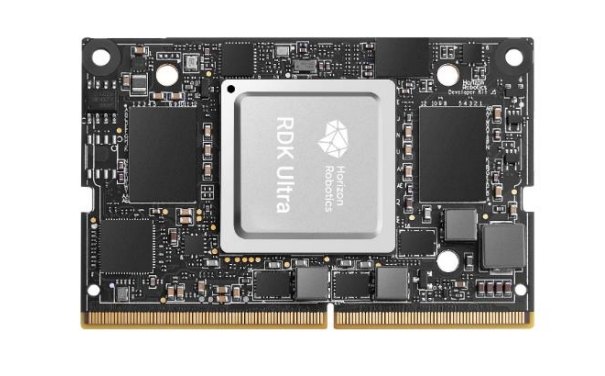
Journey 5Horizon Robotics
128 TOPSINT8 · 16 nm · TSMC
No robot named yet
Vehicle computers2021
Journey 5Horizon Robotics
128 TOPSINT8 · 16 nm · TSMC
No robot named yet - Vehicle computers2021 MDC 610Huawei 200+ TOPSINT8 No robot named yet
- Vehicle computers2021 MDC 810Huawei 400+ TOPSINT8 No robot named yet
 Robot modules2020
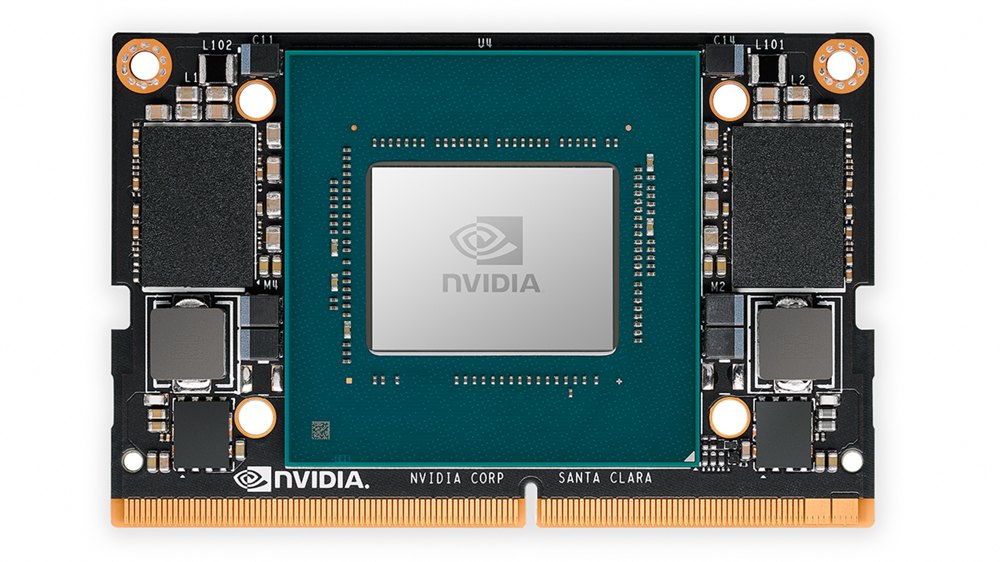
Jetson Xavier NXNVIDIA
21 TOPSINT8 · 10-20 W · 12 nm · TSMC
Used in 3 robot models
Robot modules2020
Jetson Xavier NXNVIDIA
21 TOPSINT8 · 10-20 W · 12 nm · TSMC
Used in 3 robot models - CPUs2020 Core i5-1135G7Intel —Quad-core x86 up to 4.2 GHz Used in 1 robot model
 Robot chips2020
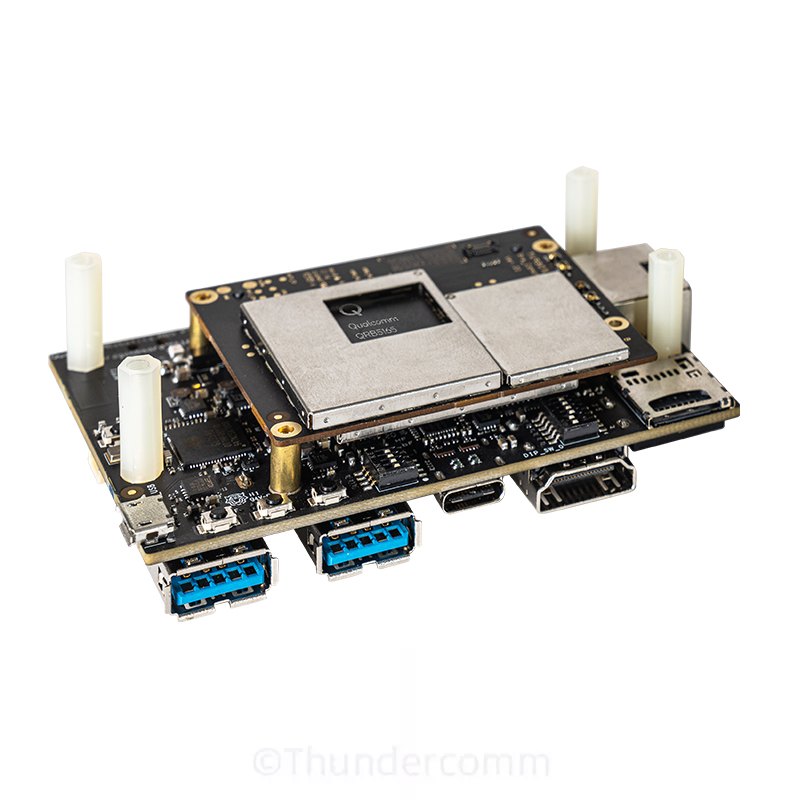
QRB5165 (Robotics RB5)Qualcomm
15 TOPSINT8
No robot named yet
Robot chips2020
QRB5165 (Robotics RB5)Qualcomm
15 TOPSINT8
No robot named yet - Vehicle computers2020 Journey 3Horizon Robotics 5 TOPSINT8 · 2.5 W · 16 nm · TSMC No robot named yet
- Vehicle computers2020 Huashan A1000Black Sesame Technologies 58 TOPSINT8 · 16 nm · TSMC No robot named yet
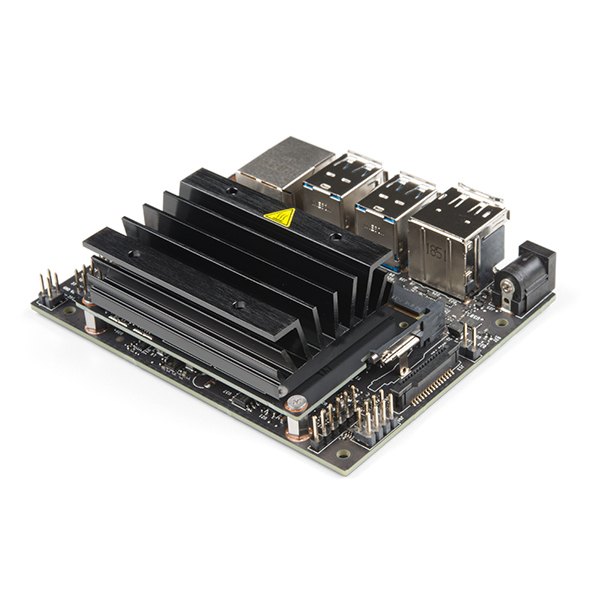 Robot modules2019
Jetson NanoNVIDIA
0.47 TFLOPSFP16 (dense) · 5-10 W · 20 nm · TSMC
Used in 4 robot models
Robot modules2019
Jetson NanoNVIDIA
0.47 TFLOPSFP16 (dense) · 5-10 W · 20 nm · TSMC
Used in 4 robot models - Vehicle computers2019 FSD Chip (Hardware 3)Tesla 72 TOPSper chip (two neural arrays of 36 TOPS); two chips per computer · up to about 100 W per computer · 14 nm · Samsung Used in 2 robot models
- CPUs2019 Core i7-8665UIntel —Quad-core x86 up to 4.8 GHz Used in 2 robot models
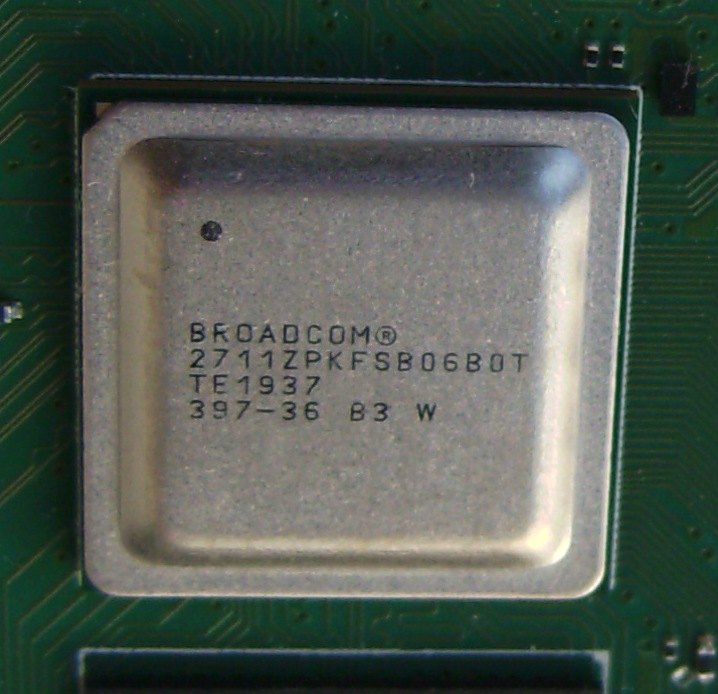 CPUs2019
Raspberry Pi 4 (BCM2711)Raspberry Pi / Broadcom
—Quad-core Cortex-A72 at 1.5-1.8 GHz
Used in 2 robot models
CPUs2019
Raspberry Pi 4 (BCM2711)Raspberry Pi / Broadcom
—Quad-core Cortex-A72 at 1.5-1.8 GHz
Used in 2 robot models - Vehicle computers2019 Journey 2Horizon Robotics 4 TOPSINT8 · 2 W No robot named yet
- AI accelerators2019 Hailo-8Hailo 26 TOPSINT8 No robot named yet
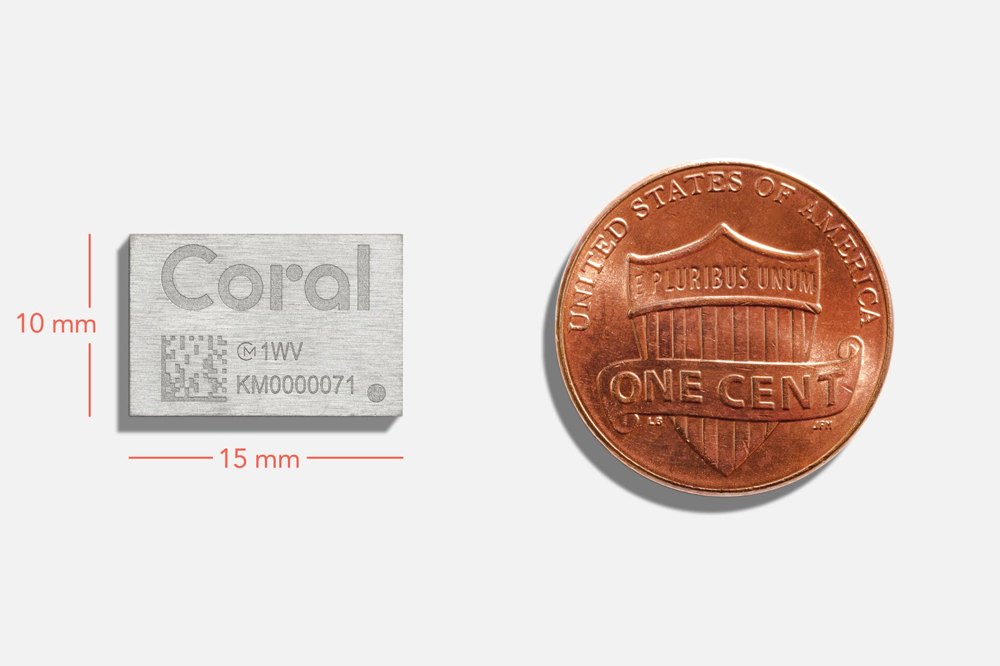 AI accelerators2019
Edge TPU (Coral)Google
4 TOPSINT8 · 2 W
No robot named yet
AI accelerators2019
Edge TPU (Coral)Google
4 TOPSINT8 · 2 W
No robot named yet 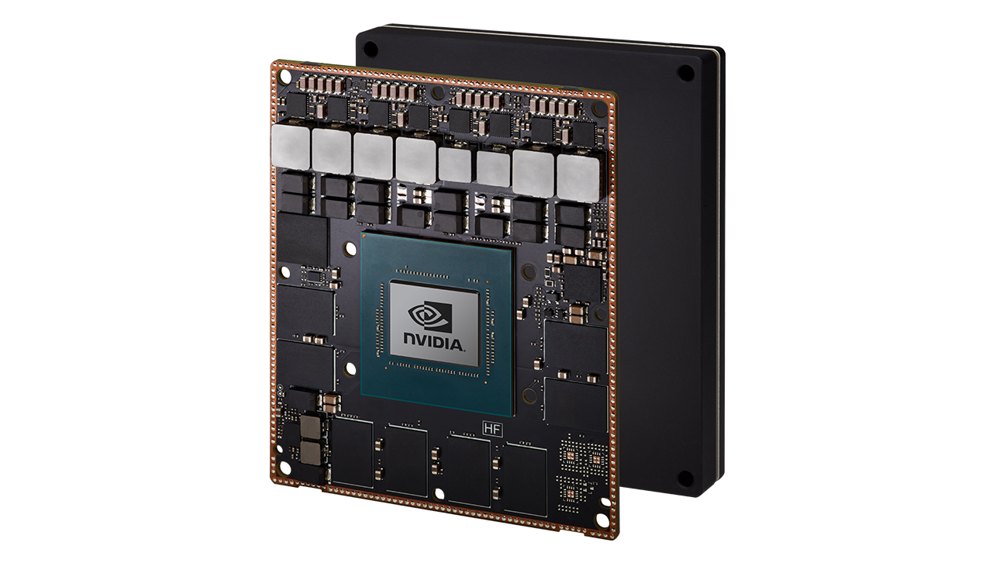 Robot modules2018
Jetson AGX XavierNVIDIA
30-32 TOPSINT8 · 10-40 W · 12 nm · TSMC
Used in 2 robot models
Robot modules2018
Jetson AGX XavierNVIDIA
30-32 TOPSINT8 · 10-40 W · 12 nm · TSMC
Used in 2 robot models 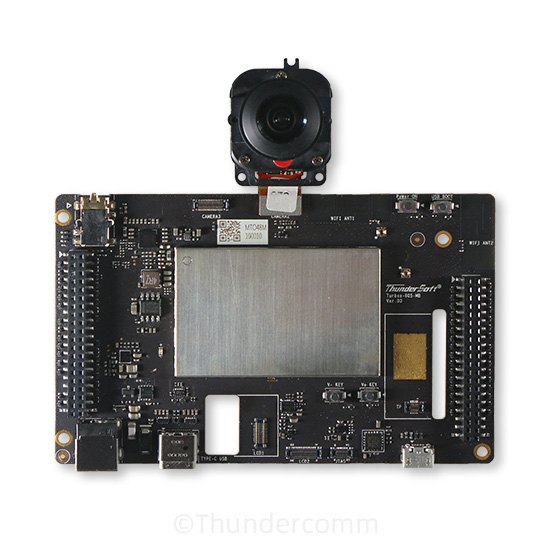 Robot chips2018
QCS605Qualcomm
—8-core Kryo 300 CPU with Hexagon 685 DSP for vision AI
Used in 1 robot model
Robot chips2018
QCS605Qualcomm
—8-core Kryo 300 CPU with Hexagon 685 DSP for vision AI
Used in 1 robot model - AI accelerators2018 CV2Ambarella —CVflow vision AI SoC Used in 1 robot model
- Vehicle computers2018 DRIVE AGX XavierNVIDIA 30 TOPSINT8 · 30 W · 12 nm · TSMC No robot named yet
- Vehicle computers2018 EyeQ4Mobileye 1.1-2 TOPSMid and High versions · 28 nm No robot named yet
- AI accelerators2018 Ascend 310Huawei (HiSilicon) 16 TOPSINT8 at 8 W · 8 W No robot named yet
 Robot modules2017
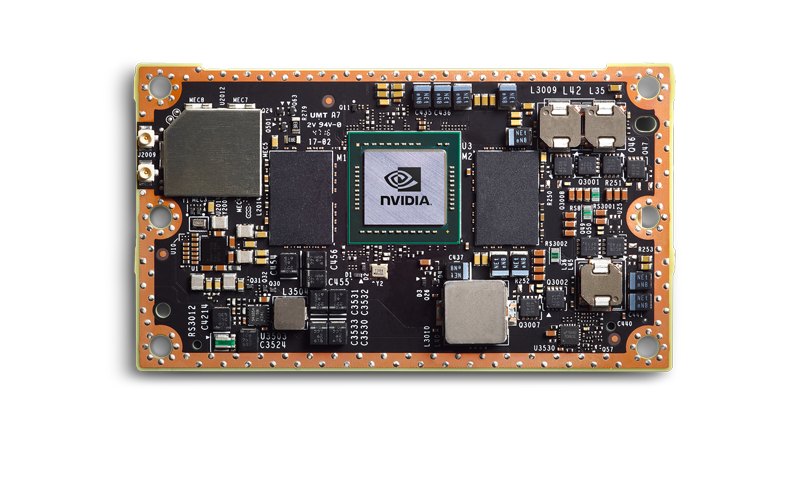
Jetson TX2NVIDIA
1.33 TFLOPSFP16 (dense) · 7.5-15 W · 16 nm · TSMC
Used in 1 robot model
Robot modules2017
Jetson TX2NVIDIA
1.33 TFLOPSFP16 (dense) · 7.5-15 W · 16 nm · TSMC
Used in 1 robot model - Vehicle computers2017 DRIVE AGX PegasusNVIDIA 320 TOPSINT8 (two Xavier plus two Turing GPUs) · 500 W · 12 nm · TSMC No robot named yet
 AI accelerators2017
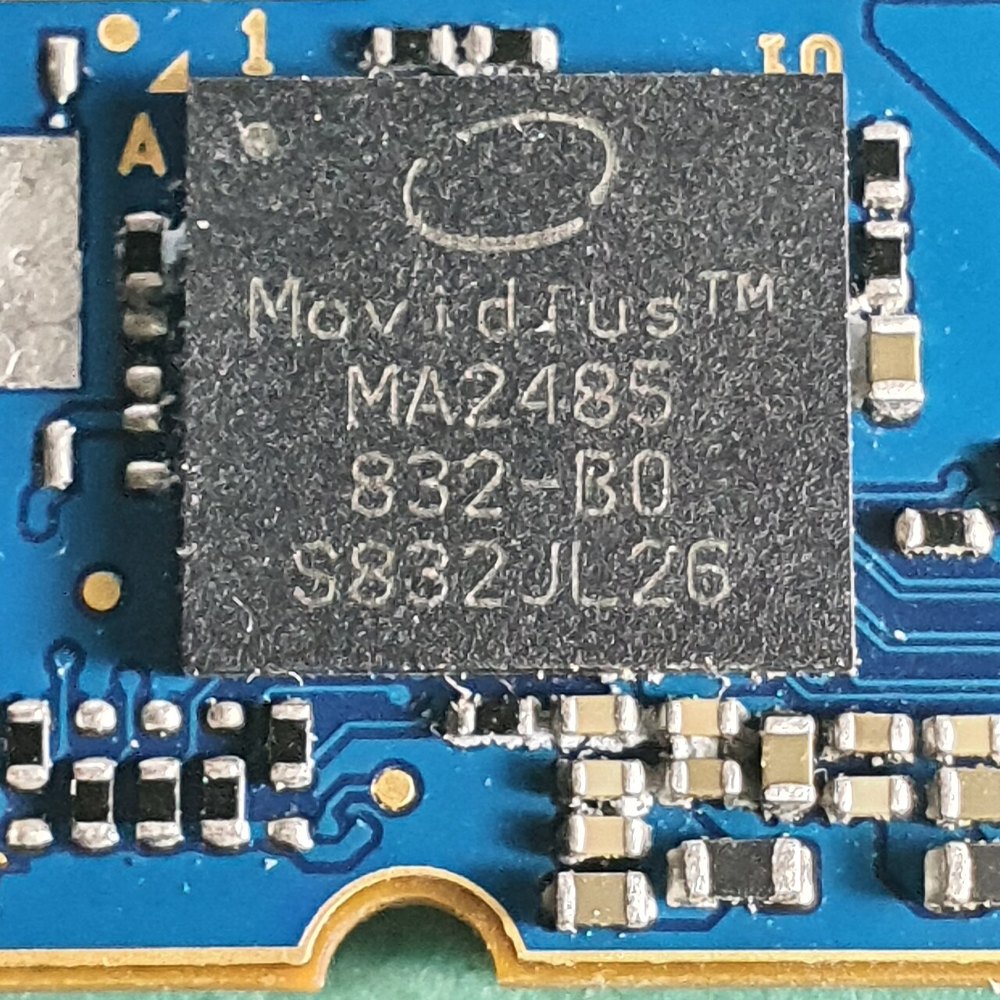
Movidius Myriad XIntel
—Vision processing unit with a dedicated Neural Compute Engine
No robot named yet
AI accelerators2017
Movidius Myriad XIntel
—Vision processing unit with a dedicated Neural Compute Engine
No robot named yet - Robot chips2016 Snapdragon 820 (APQ8096)Qualcomm —Quad-core Kryo CPU, Adreno 530 GPU, Hexagon 680 DSP Used in 1 robot model
- Vehicle computers2016 DRIVE PX 2NVIDIA 20-24 TOPSINT8 (AutoChauffeur, two Tegra X2 plus two Pascal GPUs) · 16 nm · TSMC No robot named yet
- Vehicle computers2014 EyeQ3Mobileye 0.256 TOPSINT8 · about 2.5 W · 40 nm No robot named yet
 CPUs2013
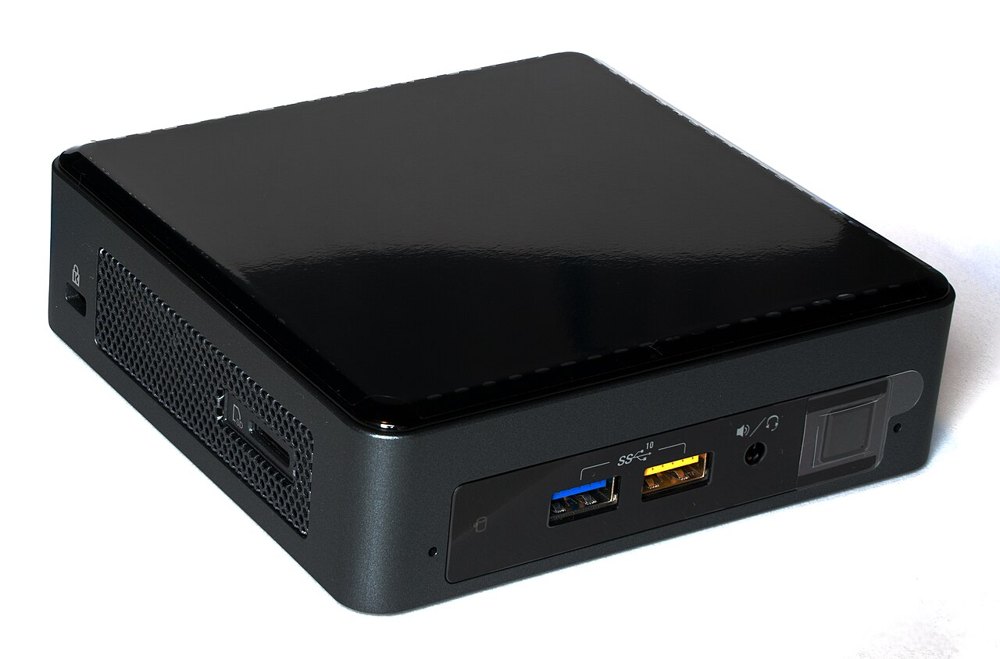
NUC mini PC (Core i5/i7)Intel
—x86 Core i3/i5/i7 mini PC
Used in 3 robot models
CPUs2013
NUC mini PC (Core i5/i7)Intel
—x86 Core i3/i5/i7 mini PC
Used in 3 robot models - CPUs2013 Atom E3845Intel —Quad-core x86 at 1.91 GHz Used in 1 robot model
- Vehicle computers— AI6Tesla —Not published No robot named yet
From factory to robot brain
Every robot sits at the end of the same chain. Counts are what the atlas tracks today.
- 4Foundries make the chipsTSMC, Samsung Foundry, Intel Foundry, SMICTSMC makes most of them
- 16Designers create themNVIDIA, Qualcomm, Intel, AMD…NVIDIA leads in robots
- 69Chips and boardsJetson AGX Orin, Jetson AGX Thor (T5000), Jetson Orin NX, DRIVE AGX Orin…Jetson Orin and Thor are the most used
- 94Robots and vehiclesNAO, Poppy Humanoid, Care-O-bot 4, THORMANG3…with a named chip
- 41AI modelsCosmos world foundation models, LeRobot, π0 (pi-zero) and π0-FAST, Gemini Robotics and Gemini Robotics-ER…the software brain
The AI models: the robots' software brain
Models that turn what a robot sees and is told into movement, and the driving models behind robotaxis.
- Robot foundation modelsOpen weights
Isaac GR00T N1.7NVIDIA · United States · 2026
2026 early-access GR00T release, 3 billion parameters, built on the Cosmos-Reason2-2B vision-language backbone. Unlike N1.6 its weights are offered under the NVIDIA Open Model License for commercial use. NVIDIA publishes optimised inference timings for Jetson Orin, Jetson AGX Thor and DGX Spark. It is the model family behind NVIDIA's Isaac GR00T reference humanoid announced in May/June 2026.
Used in: Unitree H2 Plus (NVIDIA Isaac GR00T Reference Humanoid), G1
Hugging Face (NVIDIA) - Driving modelsOpen weights
Alpamayo 1NVIDIA · United States · 2026
Open reasoning driving model announced at CES in January 2026: a 10-billion-parameter vision-language-action model that takes camera video, outputs a driving path and also explains its reasoning. NVIDIA released the weights on Hugging Face with an open simulator and a driving dataset, and pitched it partly as a teacher model that carmakers adapt. The Mercedes-Benz CLA was announced as the first car to ship with NVIDIA's driving stack built around it, as an enhanced Level 2 system.
Used in: Mercedes-Benz CLA (2026, enhanced Level 2)
Electrek - Robot foundation models
π0.7Physical Intelligence · United States · 2026
April 2026 'steerable' generalist model. It accepts several kinds of prompts (language, speed and quality hints, control-mode labels and picture subgoals) and is reported to combine skills it already knows to do tasks it was never trained on, such as folding shirts on a robot arm that had no shirt-folding data.
Used in: Universal Robots UR5e (shirt-folding example reported in coverage)
arXiv - Robot foundation modelsClosed
Helix 02 (and Helix 2.5)Figure AI · United States · 2026
January 2026 upgrade that lets one network control the whole robot, not just the upper body. It adds 'System 0', a learned whole-body controller trained on more than 1,000 hours of human motion and running at 1 kHz for balance and contact. It uses Figure 03's palm cameras and touch sensing. In September 2026 Figure described Helix 2.5, pretrained on its Index human-behaviour dataset, tidying, folding and bed-making in homes it had not seen.
Used in: Figure 03
Figure AI - Robot foundation modelsClosed
Gemini Robotics 2 (with ER 2 and On-Device 2)Google DeepMind · United States · 2026
Third generation, announced 30 July 2026. Reporting says the action model now drives a whole humanoid, walking and crouching as well as using its hands, where earlier versions mainly handled the upper body. ER 2 adds live video understanding and multi-robot coordination and is available to developers as a preview through the Gemini API; the action and on-device models are for trusted testers. DeepMind lists Agile Robots, Apptronik and Boston Dynamics as partners; Boston Dynamics agreed in January 2026 to put Gemini Robotics models into the new Atlas.
Used in: Atlas (product version)
Google DeepMind - Robot foundation modelsOpen weights
Isaac GR00T N1NVIDIA · United States · 2025
NVIDIA's first open foundation model for humanoids, released at GTC in March 2025. It splits the job in two: a slower vision-language part reads the scene and the instruction and plans, and a fast action part turns that plan into smooth joint movements. Robot makers download it and fine-tune it on their own real or simulated data. The published checkpoint is about 2 billion parameters (GR00T-N1-2B).
Used in: NEO Gamma
NVIDIA Newsroom - Robot foundation modelsOpen weights
Isaac GR00T N1.5NVIDIA · United States · 2025
June 2025 update to GR00T N1. The vision-language backbone is kept frozen, grounding was improved and a new training objective lets the model learn from human videos as well as robot data. NVIDIA reports better instruction following and success rates in simulation and on real robots. About 3 billion parameters in total.
Used in: G1
NVIDIA Research (GEAR Lab) - Robot foundation modelsOpen weights
Isaac GR00T N1.6NVIDIA · United States · 2025
Later 2025 GR00T release (3 billion parameters). It changes how the vision-language features connect to the action generator, trains jointly on action and world-modelling objectives and copes with a different number of cameras per robot. Trained on bimanual, semi-humanoid and humanoid data, real and synthetic. Weights were published under an NVIDIA licence that the model card links as non-commercial.
Hugging Face (NVIDIA) - World modelsOpen weights
Cosmos world foundation modelsNVIDIA · United States · 2025
A family of generative world models launched at CES in January 2025. Developers use them to generate physically plausible video for training and testing robots and self-driving cars, or fine-tune them for their own use. Released under NVIDIA's open model licence. These models are used to make training data; they do not drive the robot directly.
Used in: 1X Technologies (maker-level adopter named by NVIDIA), Agility Robotics (maker-level adopter named by NVIDIA), Figure AI (maker-level adopter named by NVIDIA), XPENG (maker-level adopter named by NVIDIA), Uber and Waabi (autonomous-driving adopters named by NVIDIA)
NVIDIA Newsroom - Robot foundation modelsOpen weights
π0.5Physical Intelligence · United States · 2025
April 2025 successor to π0 aimed at working in places the robot has never seen. It is trained on a mix of data from several robot types, high-level task labels and web data, and was shown cleaning kitchens and bedrooms in homes that were not in its training data. Its checkpoints were added to the open openpi repository in September 2025.
Used in: Franka arm in the DROID setup (π0.5-DROID checkpoint)
arXiv - Robot foundation models
π*0.6 (pi-star 0.6)Physical Intelligence · United States · 2025
November 2025 model that keeps improving after deployment. Using a method the company calls RECAP, the robot learns from its own attempts, from corrections by human operators and from a learned estimate of how well each attempt went, which is a form of reinforcement learning on real hardware.
arXiv - Robot foundation modelsClosed
HelixFigure AI · United States · 2025
Figure's in-house vision-language-action model, announced in February 2025 shortly after Figure ended its OpenAI collaboration. A 7-billion-parameter vision-language model handles understanding at 7-9 Hz and an 80-million-parameter policy turns that into upper-body motion at 200 Hz. Each part runs on its own low-power embedded GPU inside the robot. Figure later showed it on logistics parcel sorting, laundry folding and dishwasher loading.
Used in: Figure 02
Figure AI - Robot foundation modelsClosed
Gemini Robotics and Gemini Robotics-ERGoogle DeepMind · United States · 2025
March 2025 pair of models built on Gemini 2.0. Gemini Robotics outputs robot actions directly; Gemini Robotics-ER is a spatial-reasoning model that robot makers can connect to their own controllers. Trained mainly on the two-arm ALOHA 2 platform and also run on a Franka two-arm setup and Apptronik's Apollo humanoid. Early testers included Agile Robots, Agility Robotics, Boston Dynamics and Enchanted Tools.
Used in: Apollo, ALOHA 2 bimanual robot, Franka bimanual platform
Google DeepMind - Robot foundation modelsClosed
Gemini Robotics On-DeviceGoogle DeepMind · United States · 2025
June 2025 version of Gemini Robotics small enough to run entirely on the robot, without a network connection. Trained on ALOHA, then adapted to a Franka FR3 two-arm robot and the Apptronik Apollo humanoid. Offered to trusted testers with an SDK; weights are not public.
Used in: Apollo, Franka FR3 bimanual robot
Google DeepMind - Robot foundation modelsClosed
Gemini Robotics 1.5 and Gemini Robotics-ER 1.5Google DeepMind · United States · 2025
September 2025 models. Gemini Robotics 1.5 can think through a step in plain language before acting and transfer motions learned on one robot body to another. ER 1.5 acts as a planner that breaks jobs into steps and can call tools such as web search. ER 1.5 was opened to developers through the Gemini API; the action model stayed partner-only.
Used in: Apollo, ALOHA 2, Franka bimanual robot
Google DeepMind - Robot foundation modelsClosed
Redwood AI1X Technologies · Norway · 2025
June 2025 vision-language transformer for household mobile manipulation: fetching things, opening doors and moving around a home. At 160 million parameters it is small enough to run fully on NEO's embedded GPU at about 5 Hz. 1X says it also drives autonomy on its older EVE robot.
1X Technologies - Robot foundation modelsClosed
Skild Brain (and S1)Skild AI · United States · 2025
Skild calls this an 'omni-bodied' brain: one model meant to control quadrupeds, humanoids, table-top arms and mobile manipulators. A slow high-level policy plans manipulation and navigation and a fast low-level policy turns that into joint commands; it is pretrained on simulation and human video. In March 2026 ABB Robotics, Universal Robots and MiR agreed to integrate it, with a planned Foxconn line assembling NVIDIA servers. In August 2026 Skild introduced S1, which copies a task from a single video demonstration.
Used in: ABB Robotics industrial arms (integration partner, robots not named), Universal Robots cobots (integration partner)
Skild AI - Robot foundation models
Boston Dynamics / TRI Large Behavior Model for AtlasBoston Dynamics and Toyota Research Institute · United States · 2025
August 2025 joint result: a 450-million-parameter diffusion transformer that takes language instructions and controls the electric Atlas end to end, combining walking with long chains of manipulation. It runs at 30 Hz and plans about 1.6 seconds of motion at a time. Training data came partly from an upper-body Atlas test stand.
Used in: Atlas (electric prototype)
Boston Dynamics - Robot foundation modelsOpen weights
GO-1 (Genie Operator-1)AgiBot (Zhiyuan Robotics) · China · 2025
AgiBot's March 2025 generalist model. AgiBot calls the design ViLLA: a vision-language model plus a 'latent planner' that learns from many robot types and human videos, and an action expert trained on more than a million real demonstrations. It was pretrained on data from AgiBot's G1 robot and reported to transfer to other platforms. AgiBot released it on GitHub in September 2025, after opening its AgiBot World dataset.
Used in: AGIBOT Genie G1
StreetInsider (press release) - World modelsOpen weights
UnifoLM-WMA-0Unitree Robotics · China · 2025
Open world-model-plus-action framework that Unitree published in September 2025. The world model learns how a robot's actions change its surroundings; it can act as a simulator that generates training data, or feed an action head that decides what to do. Code and weights are on GitHub with demos on Unitree hardware.
Used in: G1, Unitree Z1 robot arm
Unitree Robotics (GitHub) - World modelsOpen weights
V-JEPA 2Meta · United States · 2025
June 2025 world model of 1.2 billion parameters, trained mostly on video, that learns to predict what happens next in a scene. After extra training on robot data from the open DROID dataset it was used to plan robot-arm actions in Meta's labs. Meta released code and checkpoints for research and commercial use.
Used in: Robot arms in Meta's labs (trained on DROID data)
Meta AI - Language models for robotsOpen weights
MagmaMicrosoft · United States · 2025
February 2025 model for AI agents that act in both software and the physical world: it understands images and video and produces plans and actions for user interfaces and robot arms. The 8-billion-parameter checkpoint (Magma-8B) is MIT-licensed. Robot results were reported on simulation benchmarks rather than a named commercial robot.
Microsoft (GitHub) - Robot foundation modelsOpen weights
SmolVLAHugging Face · United States · 2025
Compact open vision-language-action model of about 450 million parameters, released in June 2025 with full training recipes. It was trained only on community datasets and is meant to run on consumer hardware and cheap arms.
Used in: SO-100 arm, SO-101 arm, LeKiwi mobile robot
Hugging Face - Driving modelsClosed
Waymo Foundation ModelWaymo · United States · 2025
Described by Waymo in December 2025 as the world model behind the Waymo Driver. A fast encoder fuses camera, lidar and radar for quick reactions, and a Gemini-trained driving vision-language model reasons about rare situations. Both feed a decoder that predicts other road users, builds maps and generates and checks trajectories.
Used in: Waymo Jaguar I-PACE (5th-gen Waymo Driver), Waymo Ojai (6th-gen Waymo Driver, Zeekr-built)
Waymo - Robot foundation models
XPeng VLA 2.0XPeng · China · 2025
Shown at XPeng's AI Day in November 2025 as one model family for its cars' driver assistance, its planned robotaxis, its IRON humanoid and its flying cars. XPeng says it goes straight from vision to action through hidden tokens, skipping a language step. It runs on XPeng's own Turing chips; IRON carries three of them. XPeng said partners such as Volkswagen would get access, but no public weights were confirmed.
Used in: IRON (next generation), XPeng robotaxi (announced November 2025)
Electrek - Robot foundation modelsOpen weights
π0 (pi-zero) and π0-FASTPhysical Intelligence · United States · 2024
A general robot-control model that pairs a vision-language model with a 'flow matching' action generator so it can output smooth, fast motions. Shown in October 2024 on single-arm, two-arm and mobile robots doing tasks like folding laundry. In early 2025 Physical Intelligence released the weights and code as openpi under Apache 2.0, together with π0-FAST, a variant that turns actions into tokens.
Used in: ALOHA bimanual robots (fine-tuned checkpoints in openpi), Franka arm in the DROID setup, Universal Robots UR5 (example in openpi)
arXiv - Language models for robotsClosed
OpenAI models for Figure robots (speech and reasoning)OpenAI · United States · 2024
In February 2024 Figure announced a deal with OpenAI to build AI models for its humanoids; OpenAI's models gave Figure 01 and Figure 02 spoken conversation and language reasoning. Figure ended the agreement in February 2025 to build its own models (Helix). OpenAI earlier did robot-hand research (Dactyl, about 2018-2019) and in 2026 was reported to be rebuilding a robotics hardware team; no OpenAI robot model has been released publicly.
TechCrunch - World modelsOpen weights
1X World Model1X Technologies · Norway · 2024
September 2024 learned simulator: given what the robot sees and what it is about to do, it predicts how the scene will change, so 1X can test policies on many situations without building 3D assets. Trained on thousands of hours of EVE humanoid data from homes and offices. 1X released 100+ hours of compressed video under Apache 2.0 plus baseline model weights for a public challenge; its internal production model is not public. In June 2026 1X set up a dedicated World Model Lab.
Used in: EVE
1X Technologies - Platforms
Agility ArcAgility Robotics · United States · 2024
Cloud software launched in March 2024 for deploying and managing fleets of Digit robots. It tracks uptime, throughput and incidents and connects to warehouse and factory management systems through APIs; GXO and Manhattan Associates were early integrations. It is a fleet and workflow platform rather than a published AI model, and Agility says it stays integrated with Digit 5.
Used in: Digit (2023 commercial version), Digit 5
Agility Robotics - Robot foundation modelsClosed
RFM-1 (Robotics Foundation Model 1)Covariant · United States · 2024
March 2024 model of about 8 billion parameters, trained on internet data and on the physical interaction data gathered by Covariant's warehouse picking robots. It takes text, images, video, joint angles, force readings and suction data, and can output robot commands or predicted video. First aimed at warehouse pick-and-place.
Used in: Covariant Brain warehouse picking robots
Business Wire - PlatformsOpen weights
LeRobotHugging Face · United States · 2024
Open-source (Apache 2.0) PyTorch library, datasets format and model hub for real-world robot learning. It bundles imitation-learning policies (ACT, Diffusion Policy) and vision-language-action models (π0, SmolVLA and GR00T N1.7), plus drivers for low-cost arms and some humanoids.
Used in: Reachy 2, HopeJR, G1, SO-100 arm, LeKiwi mobile robot
Hugging Face (GitHub) - Robot foundation modelsOpen weights
OpenVLAStanford University, UC Berkeley and collaborators · United States · 2024
Open 7-billion-parameter vision-language-action model released in June 2024 with its training code; for a while it was the main open baseline that newer models compared against. Tested zero-shot on WidowX and Google robots and fine-tuned on Franka arms.
Used in: WidowX arm (Bridge V2 setup), Franka arm (tabletop and DROID setups)
OpenVLA (Stanford et al.) - Driving modelsClosed
EMMA (End-to-End Multimodal Model for Autonomous Driving)Waymo · United States · 2024
October 2024 research model built on Gemini that maps raw camera input straight to future driving paths with one network. Waymo presented it as a research paper and listed open problems such as speed and long video. It was not described as running in the robotaxi fleet.
Waymo - Driving modelsClosed
Wayve AI DriverWayve · United Kingdom · 2024
Wayve's end-to-end driving software, learned from data rather than rules and designed to work without HD maps, from driver assistance up to Level 4. It is meant to fit different car computers. Driverless Uber rides using it began in London in September 2026 in a Ford Mustang Mach-E; Wayve also cites a production agreement with Mercedes-Benz.
Used in: Wayve AI Driver robotaxi on Uber (London)
Wayve - Robot foundation modelsClosed
RT-2Google DeepMind · United States · 2023
July 2023 model that popularised the term vision-language-action. It took large vision-language models (PaLI-X and PaLM-E) and trained them to output robot actions as well as text, so web knowledge could carry over to robot control. Robot data came from the RT-1 fleet.
Used in: Everyday Robots mobile manipulators (RT-1 data fleet)
Google DeepMind - Driving modelsClosed
Tesla FSD end-to-end neural network (v12 onward)Tesla · United States · 2023
Tesla launched FSD (Supervised) v12 in early 2024 using a vision-based, end-to-end neural-network architecture trained on real-world driving data (Tesla, Q1 2024 Update). Its later v14 system uses an end-to-end foundation model trained on customer and Robotaxi data (Tesla, Q4 and FY 2025 Update). Tesla's Robotaxi service launched in Austin in June 2025 (Tesla, 2025 proxy statement).
Used in: Tesla Robotaxi (Model Y service fleet)
Tesla / U.S. Securities and Exchange Commission - Robot foundation models
TRI Diffusion Policy / Large Behavior ModelsToyota Research Institute · United States · 2023
In September 2023 TRI showed that 'Diffusion Policy', a generative method borrowed from image AI, could teach robots dexterous skills such as pouring and tool use from a few demonstrations, and framed it as a step towards Large Behavior Models for robots. TRI said it had taught over 60 skills and aimed for 1,000 by the end of 2024. In October 2024 it agreed to work with Boston Dynamics on Atlas.
Toyota Research Institute - Driving modelsClosed
LINGO-1 and LINGO-2Wayve · United Kingdom · 2023
LINGO-1 (September 2023) commented on driving scenes in plain language and answered questions, without controlling the car. LINGO-2 (April 2024) is a vision-language-action driving model that steers and gives a running explanation, and Wayve says it was the first language-trained driving model tested on public roads, in central London.
Used in: Wayve test car in central London (vehicle not named)
Wayve - World models
GAIA generative world models (GAIA-1 to GAIA-4)Wayve · United Kingdom · 2023
Wayve's generative driving world models. GAIA-1 (2023, later scaled to 9 billion parameters) generates realistic driving video from video, text and actions; GAIA-2 (March 2025) adds multi-camera output and control over weather, lighting, road layout and rare safety-critical events. Wayve described GAIA-4 in August 2026 as powering closed-loop simulation with its AI Driver in the loop.
Wayve - Robot foundation models
RT-1 (Robotics Transformer 1)Google (Research / Everyday Robots) · United States · 2022
December 2022 transformer model that reads a short run of camera frames plus a text instruction and outputs robot actions as tokens. It was trained on 130,000 demonstrations collected over 17 months by 13 mobile manipulators. Google released the code; whether the original weights were released is unclear from the sources read.
Used in: Everyday Robots mobile manipulator (13 robots)
Google Research - PlatformsClosed
Tesla Optimus AI (shared with the FSD stack)Tesla · United States · 2021
Tesla has said since its 2021 AI Day that its humanoid is driven by the same AI approach it builds for its cars, and in mid-2025 the head of Autopilot software also took over the Optimus programme. Tesla has not published a separate named robot model. Elon Musk said in 2026 that the coming AI5 chip is meant to give Optimus enough on-board intelligence to work without a network link.
Used in: Optimus Gen 2
Tesla
Export controls and policy
Rules on chips, rare-earth magnets and robots that shape who can build what, newest first.
- FCC adds foreign-produced advanced robotic devices to its Covered ListUS Federal Communications Commission (Public Safety and Homeland Security Bureau)
Following an executive-branch national-security finding, the FCC barred new equipment authorisations for foreign-produced ground robots: autonomous mobile robots, humanoids and quadrupeds above 4.4 lb with sensors, network links and control software. Without authorisation, new models cannot be imported or sold. 'Foreign-produced' means anything that is not a US-made domestic end product under the Buy American test, so it applies to all non-US makers, not only Chinese ones. Already-authorised models are unaffected, and makers can seek a Conditional Approval from the Department of War.
Affects: Unitree, AgiBot, UBTECH and other Chinese robot makers,Japanese, Korean and European humanoid and quadruped makers,Imported autonomous mobile robots
Skadden - EU AI Omnibus enters into force, delaying high-risk AI deadlinesEuropean Union (Regulation (EU) 2026/1744)
The AI Omnibus, published on 24 July 2026, moved the start of high-risk obligations for stand-alone systems from 2 August 2026 to 2 December 2027 and for AI built into products under EU safety law, such as machinery, to 2 August 2028. Bans, AI-literacy duties, general-purpose model rules and transparency duties kept their dates. One law-firm summary says machinery overlaps are now handled under the Machinery Regulation rather than directly under the AI Act.
Affects: Robot and machinery makers selling AI-driven products in the EU,Autonomous vehicle software suppliers
National Law Review - House passes FY2027 defence bill barring Pentagon from China-linked humanoid robotsUS House of Representatives (H.R.8800, Sec. 163); Senate Armed Services Committee (S.4784, Sec. 5813)
The House-passed NDAA would stop the Defense Department buying or leasing humanoid robots made in China or that use Chinese firmware, software, AI models, cloud services or remote-update links, for new contracts. The Senate version instead bars the department from buying or operating unmanned ground vehicles, including humanoids, from China-domiciled or China-controlled companies. As of September 2026 the two versions still had to be reconciled.
Affects: Chinese humanoid makers (US defence market),Robots running Chinese AI models or cloud services
Covington, Inside Government Contracts - GUARD Act would push Chinese humanoids and robot dogs onto the FCC Covered ListReps. John Moolenaar, Jay Obernolte and Jennifer McClellan (H.R.9129)
The bill gives national-security agencies one year to decide whether humanoid or quadruped robot communications gear from entities tied to countries of concern is an unacceptable risk; without a decision, the FCC must add it to the Covered List, which blocks new equipment authorisations. Allies are excluded. Parts of it were folded into the House defence bill.
Affects: Unitree and other Chinese humanoid and quadruped makers (US commercial market)
GovInfo - Trump-Xi summit leaves China's rare earth licensing largely unchangedUS and Chinese governments
After the 14-15 May 2026 summit the White House said China would address US shortages of rare earths such as yttrium, scandium and neodymium, and Reuters reported plans for streamlined general licences. Industry analysts said the April 2025 licensing regime remained in place and that defence-linked buyers would find licences harder to get.
Affects: Magnet supply for US robot and vehicle makers
Benchmark Mineral Intelligence - American Security Robotics Act introduced to bar federal use of adversary-made ground robotsUS Senators Tom Cotton and Chuck Schumer (S.4235); House companion from Rep. Elise Stefanik
The bill would stop executive agencies buying unmanned ground vehicle systems, including humanoids, made by entities in or controlled by covered nations, and after a year bar operating them or funding them through grants or contracts. Limited exemptions exist for defence, homeland security, state and justice uses. It was referred to the Senate Homeland Security committee.
Affects: Unitree and other Chinese humanoid and quadruped makers (US federal market),Federal contractors using such robots
GovInfo - US imposes a 25% Section 232 tariff on certain advanced chips and allows H200 exports case by caseWhite House (Section 232 proclamation, published 20 January); US Department of Commerce, BIS (rule effective 15 January)
A presidential proclamation used Section 232 to put a 25% tariff on certain advanced chips; reporting says this is how the US collects its 25% on H200s, which must pass through the US for testing before going to China. A BIS rule moved licence reviews for the H200 and less powerful chips to China and Macau from presumed denial to case-by-case, if exporters certify enough US supply, no diversion of foundry capacity, buyer security and independent US testing. China-bound volumes were capped at half of US shipments.
Affects: NVIDIA H200,AMD equivalents,Chinese AI and robotics companies
Federal Register - China tightens dual-use exports to Japan, including rare earths and magnetsChina Ministry of Commerce
In January 2026 China announced new export restrictions on dual-use items to Japan, covering rare earths, permanent magnets and other critical minerals used in defence production. Japan is home to several major robot and actuator makers. The exact date was not confirmed in the sources read.
Affects: Japanese robot, servo and actuator makers,Japanese carmakers
CSIS - Beijing holds back H200 imports; only small deliveries by mid-2026Chinese government (customs, NDRC); reported by press
Press reports said Chinese customs were told to block H200 imports and that each purchase needed case-by-case approval, as Beijing pushed buyers towards domestic chips such as Huawei Ascend. In April the US Commerce Secretary said China had not let firms buy; in July a US official told Congress very few had shipped; by August ByteDance and Tencent had each reportedly received about 10,000.
Affects: NVIDIA H200,Huawei Ascend and other Chinese AI chips,Chinese robot-model developers
Tom's Hardware - Trump says NVIDIA may sell H200 to approved Chinese buyers for a 25% cutWhite House
President Trump said NVIDIA could ship the H200 to approved customers in China with the US taking 25%, while Blackwell and Rubin chips stayed off limits. Commerce wrote the policy into rules in January 2026.
Affects: NVIDIA H200,AMD and Intel equivalents,Chinese AI labs and cloud providers
CNBC - Humanoid ROBOT Act introduced in the US SenateUS Senators Bill Cassidy and Chris Coons (S.3275)
The bill would stop federal agencies buying humanoid robots made or developed by entities tied to countries of concern, bar contractors from using them on federal work (with defence waivers), bring certain investments in US humanoid companies under CFIUS review and order a Pentagon threat report. It was referred to the Senate Banking Committee.
Affects: Chinese humanoid makers such as Unitree and UBTECH (federal market),Foreign investors in US humanoid start-ups
GovInfo - After Busan truce, China suspends October rare earth measures until 10 November 2026China Ministry of Commerce; White House
Following the 30 October 2025 Trump-Xi meeting, China suspended the 9 October rare earth, battery-material and technology controls for a year and separately paused its gallium, germanium and antimony ban on the US until 27 November 2026. The April 2025 licensing for seven rare earths and magnets stayed in place.
Affects: Magnet and mineral supply for robot and vehicle makers,NVIDIA (truce also covered chip issues)
CNBC - China expands rare earth controls to foreign products and five more elementsChina Ministry of Commerce (MOFCOM)
China announced licences for holmium, erbium, thulium, europium and ytterbium, for related technologies, and for foreign-made parts and magnets containing even 0.1% of Chinese-origin heavy rare earths. Chinese nationals also needed approval to support rare earth or magnet work abroad. These measures were suspended for a year in November 2025.
Affects: Magnet makers in Japan, Europe and the US using Chinese feedstock,Robot and EV motor supply chains,Lithium battery material exports
CNBC - Dutch takeover of Nexperia and China's export block disrupt car chip supplyNetherlands government; China Ministry of Commerce
The Netherlands took control of Chinese-owned chipmaker Nexperia under a 1952 law. China replied by blocking exports from Nexperia's China plant, which packages many basic car chips. Honda and others cut production in late October; after the Busan meeting China allowed case-by-case exemptions and the Dutch suspended their order on 19 November 2025.
Affects: Carmakers and robotaxi vehicle platforms (Honda, Volkswagen, Nissan, Mercedes-Benz),Basic discrete and logic chips used across vehicles and robots
CNBC - US extends Entity List restrictions to 50%-owned affiliatesUS Department of Commerce, BIS
An interim final rule made any company at least 50% owned by listed entities automatically subject to the same restrictions. After the October 2025 Trump-Xi meeting it was suspended for one year from 10 November 2025, with the suspension due to end on 9 November 2026 unless extended.
Affects: Subsidiaries of listed Chinese tech groups,US and allied chip suppliers to Chinese firms
Federal Register - China says NVIDIA broke anti-monopoly law over Mellanox dealChina State Administration for Market Regulation (SAMR)
SAMR gave a preliminary finding that NVIDIA violated China's anti-monopoly law in connection with its 2020 Mellanox purchase and said its investigation would continue. Potential fines were estimated at up to 10% of the previous year's China sales; no final penalty was found in the sources read.
Affects: NVIDIA China business, including Jetson robot computers
CNBC - US opens Section 232 national-security investigation into robot and industrial machinery importsUS Department of Commerce, BIS
Commerce began an investigation into whether imports of robotics and industrial machinery threaten national security, which could lead to tariffs or quotas; public comments were requested in a 26 September 2025 notice. No resulting proclamation had been found in the Federal Register as of 10 October 2026.
Affects: Imported industrial robots and cobots,Chinese humanoid and quadruped makers selling into the US,Japanese and European robot makers
Federal Register - US lets H20 and MI308 sales resume in exchange for a 15% revenue shareWhite House; NVIDIA and AMD
President Trump said NVIDIA would give the US government 15% of its H20 revenue in China, and AMD the same for the MI308, in return for export licences. NVIDIA's filings said the arrangement had not been written into regulation and that only about $50-60 million of H20 was sold under the licences because Beijing discouraged purchases.
Affects: NVIDIA H20,AMD MI308
NPR - China's cyberspace regulator summons NVIDIA over H20 'backdoor' concernsCyberspace Administration of China (CAC)
The CAC asked NVIDIA to explain alleged tracking and remote-shutdown risks in the H20; NVIDIA denied any backdoors or kill switches. Chinese firms were then reportedly told to pause H20 purchases, so sales stayed near zero even after US licences resumed.
Affects: NVIDIA H20,Chinese AI and robotics firms using NVIDIA data-centre GPUs
CNBC - US-China London framework restarts some rare earth and magnet flowsUS and Chinese governments
After two months of severe shortages, China agreed to resume rare earth and magnet exports to the US under the licensing system. CSIS estimated only about a quarter of applications filed since April had been approved by then, and approvals remained uneven.
Affects: Magnet supply for US robot, actuator and car makers
CSIS - US rescinds AI Diffusion rule and warns against Huawei Ascend chipsUS Department of Commerce, BIS
Commerce said it would rescind the January 2025 AI Diffusion rule and not enforce it, and issued guidance that using certain Huawei Ascend chips anywhere risks breaking US export rules. It also warned about US chips being used to train Chinese AI models and about diversion.
Affects: Huawei Ascend AI chips,Global buyers of NVIDIA and AMD accelerators
BIS - Musk says China's magnet licensing is slowing OptimusTesla
On Tesla's earnings call Elon Musk said Optimus production was affected by China's new rare earth magnet licences, with Beijing seeking assurances the magnets would not go to military uses. It was the clearest public example of the April 2025 controls hitting a humanoid programme.
Affects: Tesla Optimus,Humanoid makers relying on Chinese magnets
CNBC (via NBC San Diego) - US requires a licence for NVIDIA H20 and AMD MI308 sales to ChinaUS government (Commerce), disclosed by NVIDIA
The US told NVIDIA that its China-specific H20 GPU, and AMD's MI308, now needed export licences for China, citing memory and interconnect bandwidth and possible supercomputer use. On 14 April it said the requirement was indefinite. NVIDIA first estimated a $5.5 billion charge and later booked about $4.5 billion.
Affects: NVIDIA H20,AMD MI308,Chinese cloud and AI firms that train robot and driving models
CNBC - China requires licences for seven rare earths and magnets containing themChina Ministry of Commerce (MOFCOM) and General Administration of Customs
In reply to US tariffs, China required case-by-case export licences for samarium, gadolinium, terbium, dysprosium, lutetium, scandium and yttrium and for permanent magnets containing them. Exports fell sharply in April and May 2025 and several carmakers cut output. The licensing regime was still in force in 2026.
Affects: NdFeB and SmCo magnets in robot joint motors and EV motors,Tesla Optimus,Robot and actuator makers outside China,Carmakers
CSIS - US issues AI Diffusion Framework (later withdrawn)US Department of Commerce, BIS
A rule set worldwide country tiers and caps for advanced AI chips and, for the first time, controlled the weights of certain advanced closed AI models, while creating licence exceptions for trusted destinations. It was rescinded before it took effect (see 13 May 2025).
Affects: NVIDIA and AMD data-centre GPU exports worldwide,Closed-weight frontier AI models
Federal Register - China bars gallium, germanium and antimony exports to the USChina Ministry of Commerce (MOFCOM), Document No. 46
A day after the US rule, China set a presumption of denial for dual-use exports of gallium, germanium, antimony and superhard materials to US users, banned transhipment through other countries and tightened checks on graphite. It was suspended in November 2025 until 27 November 2026.
Affects: US chip, sensor and battery supply chains,Robot and EV makers buying GaN power parts and graphite
CSIS - US adds high-bandwidth memory controls and lists 140 Chinese entitiesUS Department of Commerce, BIS
New rules controlled high-bandwidth memory (HBM) needed for AI accelerators, added more chipmaking equipment controls and new foreign-direct-product rules, and put 140 Chinese entities on the Entity List.
Affects: HBM makers (SK hynix, Samsung, Micron) selling to China,Chinese AI chip designers such as Huawei Ascend,Chinese chip-tool makers
Federal Register - EU AI Act enters into forceEuropean Union (Regulation (EU) 2024/1689)
The EU's AI law took effect with staged deadlines: bans on certain AI practices from 2 February 2025, duties for general-purpose AI model providers from 2 August 2025, and high-risk rules later. AI that is a safety component of products already under EU safety law, such as machinery, falls in the high-risk group, which is the main route by which it touches robots. The high-risk dates were later pushed back (see the 2026 AI Omnibus).
Affects: Robot makers selling in the EU whose AI is a safety component of machinery,Providers of general-purpose AI models used in robots,Autonomous vehicle and robot software suppliers
EUR-Lex - China bans export of rare earth extraction and separation technologyChina Ministry of Commerce (MOFCOM)
China's revised catalogue of technologies barred or restricted from export added rare earth mining, processing, smelting and extractant synthesis to the prohibited list. The aim, analysts said, was to stop other countries building their own rare earth refining, which feeds the magnets in robot and EV motors.
Affects: Rare earth refiners outside China,NdFeB magnet supply for robot actuators and EV motors
CSIS - US tightens AI chip rules to close gaps used by China-specific chipsUS Department of Commerce, BIS
BIS updated the 2022 rule, replacing the interconnect-speed test with total-performance and performance-density thresholds and extending licence requirements to more countries to limit diversion. The change caught chips that had been cut down just enough to pass the 2022 limits for sale in China. The rules took effect on 17 November 2023.
Affects: NVIDIA A800 and H800 China variants,NVIDIA L40S and similar high-end GPUs for China,Chinese buyers of data-centre GPUs
Federal Register - China puts export licences on gallium and germaniumChina Ministry of Commerce (MOFCOM)
China announced licence requirements for exports of gallium and germanium, minerals used in power and RF chips and sensors, taking effect on 1 August 2023. It was the first of a series of mineral controls widely seen as a reply to US chip rules.
Affects: Gallium nitride power chips used in motor drives and chargers,Germanium optics and sensors,Chip and sensor suppliers to robot and vehicle makers
CSIS - EU adopts new Machinery Regulation covering AI-driven and self-evolving machinesEuropean Union (Regulation (EU) 2023/1230)
The EU replaced the Machinery Directive with a regulation that adds safety requirements for machines with self-evolving behaviour and for autonomous mobile machinery, and covers cybersecurity of control systems. It applies from 20 January 2027 and is the main safety law for robots sold in the EU, alongside the AI Act.
Affects: Humanoid and mobile robot makers selling in the EU,Industrial robot and cobot makers
EUR-Lex - US sets first broad export controls on advanced AI chips and chipmaking tools for ChinaUS Department of Commerce, Bureau of Industry and Security (BIS)
An interim final rule required licences to send China advanced computing chips (above set performance and interconnect limits), computers containing them and certain chipmaking equipment. It widened rules on supercomputer and chip-factory end uses, added foreign-made items for 28 listed Chinese entities and required US persons to get licences to support advanced chip production in China.
Affects: NVIDIA A100 and H100 data-centre GPUs (China sales),AMD MI250,Chinese AI labs training robot and driving models,Chinese chip fabs
Federal Register
Policy summaries describe what was announced; check the source for current status, since several measures have been paused, extended or changed.